

























































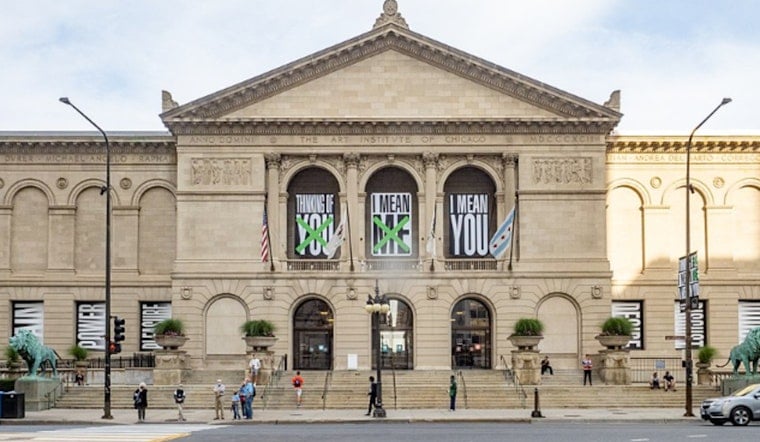
The Art Institute of Chicago’s Modern Wing has quietly turned into one of the hottest tickets in town. Its new exhibition, "Korean National Treasures: 2,000 Years of Art," is a rare, sweeping survey of 140 works drawn from the Lee Kun-hee bequest. On view through July 5, 2026, the show threads together ancient gilt-bronze Buddhist sculpture, Joseon-period painting, high-Korean porcelain, and late-20th-century canvases. Many of these objects have never left Korea before, so Chicago visitors are getting a genuinely uncommon look.
According to the Art Institute of Chicago, the exhibition gathers 140 objects selected from the National Bequest of Lee Kun-hee, with 22 of those officially designated National Treasures or Treasures by the Korean government. The museum notes that this is the largest Art Institute exhibition devoted to Korean art in four decades, which gives a sense of just how big a swing this show represents.
The objects arrive as part of a massive donation by the family of the late Samsung chairman Lee Kun-hee; the heirs gave more than 23,000 works to the South Korean state in 2021 while facing a multibillion-dollar inheritance-tax bill, according to UPI. That transfer opened the door for museums in Korea and abroad to select highlights for public display and research, setting the stage for this international tour.
Highlights to See
The range on view is wide, and the curators lean into that breadth. Highlights run from Kim Whanki’s 1973 abstraction "Echo," which anchors the modern section, to classical works such as an 18th-century "Tripitaka Bodhisattvas" painting and a tall cobalt-blue underglaze vase embellished with a landscape motif. Yeonsoo Chee, the Art Institute’s associate curator of Korean art, said she distilled the bequest into a compact, thematic selection and remarked, "I was very eager to actually engage with this collection," in an interview with the Chicago Sun-Times. The installation deliberately places ceramics, Buddhist devotional objects, and modern canvases in conversation to draw visual and spiritual lines across centuries.
The show began its international run at the Smithsonian’s National Museum of Asian Art in Washington, D.C., according to the Smithsonian, and after the Chicago presentation, it is scheduled to travel to the British Museum, per reporting by AJU Press. Coverage of the Washington stop noted strong attendance and strong public interest in seeing Korean art framed beyond familiar pop-culture touchpoints, suggesting this is not just a niche art-historical event.
For Chicago audiences, the show serves as both an aesthetic sweep and a cultural corrective, a chance to see how Korea’s art history, from ritual objects to abstract modernism, has been re-framed for international viewers. Tickets and visitor information are available on the museum’s website, and it is worth planning, because a run like this rarely circles back.




.jpg)