

























































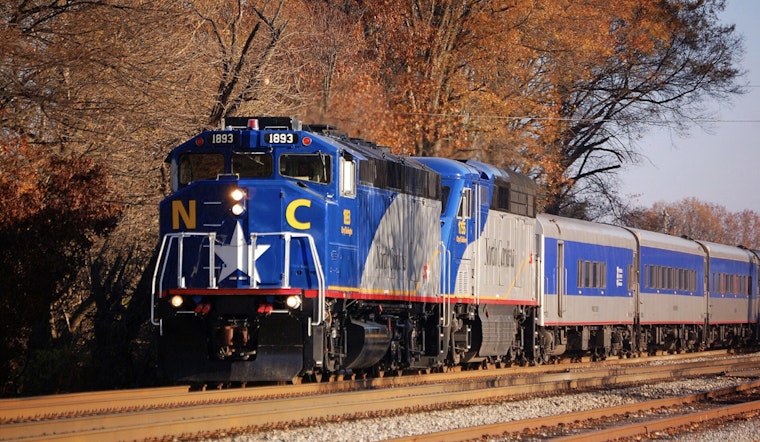
After decades without passenger service, the idea of trains rolling back into Asheville is starting to feel less like nostalgia and more like an actual plan. Fresh studies and vocal rail advocates are talking up big economic benefits, but with a price tag in the mid six hundreds of millions of dollars and hefty state and local matches, the next stretch of this journey looks every bit as political and financial as it is technical.
Big price tag, big promise
Two recent analyses put the capital cost of restoring passenger rail between Salisbury and Asheville in the mid six hundreds of millions. The North Carolina Department of Transportation’s 2023 Western North Carolina feasibility study pegs a conceptual capital total at roughly $665 million and notes that competitive federal discretionary grants could cover up to about 80% of development costs, including early preparation and NEPA work, according to NCDOT. Federal materials and congressional summaries point back to the 2021 Bipartisan Infrastructure Law, which opened an unusually large pool of rail money nationwide and helped move corridors like this one into formal planning channels.
Projected payoffs
An economic impact analysis prepared for NCDOT estimates that full buildout would support more than 5,200 construction job-years, about $360.5 million in construction wages and roughly $1.05 billion in one-time economic output. Once trains are running, long-term operations are projected to support about 305 permanent jobs and nearly $60 million in recurring annual output, as reported in a new rail impact report. Advocates say that kind of money would ripple through small mountain towns along the route, as visitor traffic grows and workers gain more ways to move around the region.
What the trains would look like
The feasibility work outlines a roughly 139-mile Salisbury–Asheville corridor with three daily round trips. Conceptual schedules show run times between about 3 hours 25 minutes and 3 hours 48 minutes, with modeled local ridership of roughly 100,000 trips a year by 2045 under the plan, according to NCDOT. The proposal would reuse Norfolk Southern’s S-Line, with significant upgrades to single-track segments, signals and stations so freight and passenger trains can share the route.
Repairs, railroads and local politics
Local reporting and advocates point to a looming hurdle that is far less glamorous than shiny new trains: track work. One local estimate puts needed repairs on the steep Old Fort Loops in the $40 million to $50 million range. Even after likely federal grant awards, state and local governments would still need to assemble roughly $130 million in matching funds, according to Mountain Xpress. The Western North Carolina Rail Committee and elected leaders, including co-chair Ray Rapp and Asheville Mayor Esther Manheimer, who is slated to appear at a March 18 conference on rail and regional economic development, have been working to keep the corridor in regional planning conversations as the next concrete step.
Funding paths and next steps
Getting through the Federal Railroad Administration’s Corridor Identification and development stages, locking in letters of local support and scoring the line into state funding rounds will all be crucial before the project is ready for a serious federal grant push, recent coverage of the corridor notes. If the corridor advances, officials say a mix of federal discretionary grants, state STI nominations and local matches will dictate how fast pieces of the project move, which means trains could still be many years away even if planning speeds up now.
Amtrak has already included Asheville in its longer-range planning talks, and state advocates point to potential service sometime in the 2030s, underscoring how timelines remain cautious and dependent on funding and coordination with the host railroad. In the meantime, the March 18 regional conference is expected to be one of the first big public stages where officials, rail executives and local stakeholders try to turn polished study numbers into actual commitments.




