

























































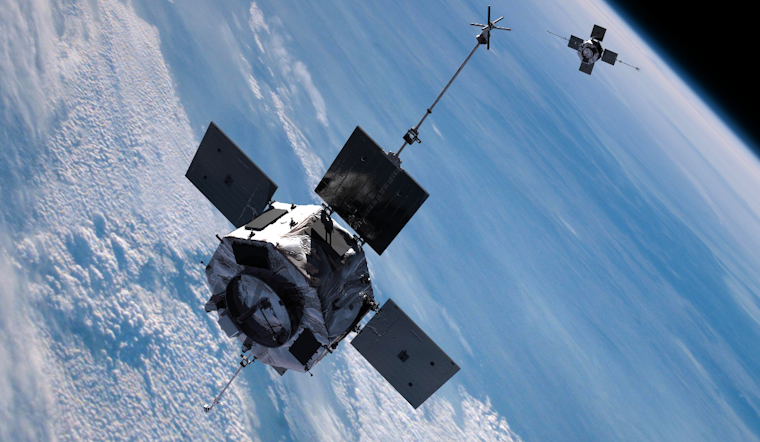
A NASA spacecraft that spent nearly 14 years scanning Earth’s radiation belts is finally coming home the hard way, with a short, fiery fall through the atmosphere expected Tuesday night. The bulk of the vehicle should be eaten up by heat on the way down, and managers and federal trackers say the odds of any piece hitting a person are vanishingly small. Even so, teams from the lab that built the probe and federal agencies will be watching its descent like hawks.
Predicted reentry window and monitoring
As of yesterday, the U.S. Space Force predicted the roughly 1,323-pound vehicle would re-enter Earth's atmosphere at about 7:45 p.m. EDT on Tuesday, with an uncertainty of plus or minus 24 hours, according to NASA. NASA reported that most of the spacecraft is expected to burn up on arrival, although some denser hardware could survive the plunge through the atmosphere. Both NASA and the Space Force plan to update the projected timing as fresh tracking data comes in.
What the probe studied and its mission history
The twin Van Allen Probes launched in August 2012 to measure charged particles trapped by Earth’s magnetic field and were built and operated by Johns Hopkins Applied Physics Laboratory in Laurel, Md., according to Johns Hopkins APL. Controllers retired the mission in 2019 after the spacecraft ran low on fuel, and scientists have continued to mine its archives for discoveries. Coverage of the reentry also notes the craft’s mass, roughly 1,323 pounds, and the fact that its twin, Probe B, is expected to remain in orbit for years to come, per Space.com.
Why it’s coming down earlier than planned
When mission planners ended operations, they estimated the probes would stay aloft until the 2030s. Recent solar activity has sped up the schedule by boosting atmospheric drag, as the El Paso Times reported. Scientists say a stronger-than-expected solar maximum caused Earth's upper atmosphere to puff out, acting like a brake on low-orbiting hardware and hastening reentry.
Risk, burn-up and where debris might fall
“The risk of harm coming to anyone on Earth is low, approximately 1 in 4,200,” NASA said, adding that it expects most of the probe to burn up during atmospheric entry. With roughly 70% of Earth's surface covered by water, analysts say any surviving pieces are far more likely to splash into open ocean than land in a populated area. Officials say they will provide updates if the risk profile changes.
Locally managed mission and what happens next
The Van Allen Probes mission was implemented and operated out of Johns Hopkins APL in Laurel, Md., and its data continues to inform space-weather forecasts, per Johns Hopkins APL. For now, NASA and the U.S. Space Force will keep refining the reentry window and posting updates through their agency channels as tracking improves.



