

























































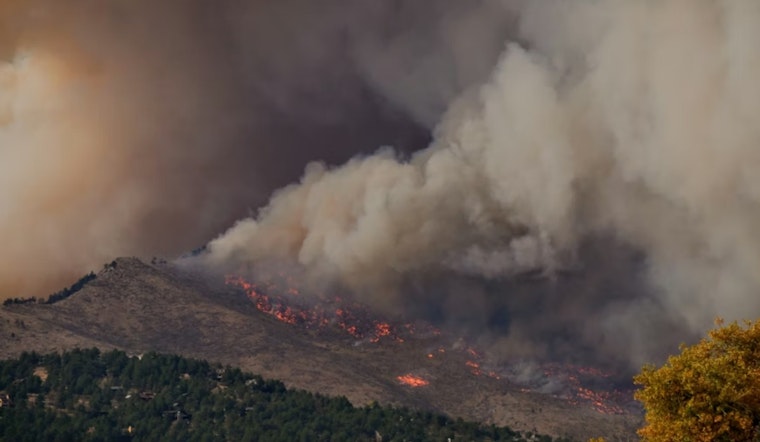
California’s long‑delayed rethink of who pays for climate‑driven disasters is finally landing this week, and the Bay Area’s pocketbook is very much on the line. The new blueprint arrives as insurers, utilities and local governments are still tallying the damage from recent mega‑fires and the financial whiplash that followed. For homeowners and smaller cities, the choices inside the report boil down to a few unappealing tradeoffs: higher utility bills, more public backing, or tighter limits on courtroom battles.
What the report is and who compiled it
Acting as administrator of the state’s Wildfire Fund, the California Earthquake Authority is scheduled to hand a "Natural Catastrophe Resiliency Study" to the governor and Legislature on April 1, 2026. The study lays out options to speed recovery and shuffle how disaster costs are spread, according to the California Wildfire Fund. While drafting the recommendations, the CEA has been gathering input from state agencies, insurance companies and claimant advocates.
What lawmakers already did
State leaders did not wait for the study to start moving money around. In September 2025, the Legislature passed SB 254, which set up an $18 billion Continuation Account and extended a non‑bypassable surcharge on electric bills for another ten years to reinforce the Wildfire Fund, as reported by the Los Angeles Times. The law splits new capital between utility shareholders and ratepayers and instructs regulators to press for safety upgrades along with changes to how wildfire liabilities are handled.
Not everyone is thrilled. Local governments and county associations have raised alarms that parts of SB 254 centralize decision‑making in Sacramento and push more costs onto communities, according to the Rural County Representatives of California.
Why the timing matters
The urgency behind this review is not theoretical. Industry and reinsurance analysts estimate that the January 2025 Los Angeles fires produced roughly $65 billion in total economic damage and about $40 billion in insured losses, figures highlighted in analyses cited by Gallagher Re. That kind of hit rattled insurers, spooked investors and sped up the legislative timeline that set this study’s deadline.
Big fires that shaped the debate
California’s recent fire scars are the backdrop for the whole conversation. In 2020, the August Complex burned more than 1,032,648 acres and destroyed hundreds of structures, according to CAL FIRE. The following year, the Dixie Fire tore through about 963,309 acres and destroyed roughly 1,311 buildings, based on the state’s investigation and reporting by the California Public Utilities Commission.
Utilities, bankruptcies and the financial backdrop
Utility finances are not a side note in this debate, they are the stage. Pacific Gas & Electric filed for Chapter 11 in January 2019 under the weight of an estimated $30 billion in wildfire liabilities, a collapse that reshaped state policy and helped trigger the creation of the original Wildfire Fund structure, according to company filings and statements at the time from PG&E. That bankruptcy forced lawmakers to confront a basic question: how do you keep recovery money flowing without blowing up utility capital markets?
What the study could recommend
Under SB 254, the CEA must explore new models or approaches that could reduce damage, speed up compensation, broaden access to insurance and fairly share costs among insurers, utilities, ratepayers and governments, language contained in the statute and related study materials cited in SB 254. On the table are ideas such as public financial backstops, pooled reinsurance or catastrophe bonds, more streamlined claims systems and potential changes to how wildfire litigation recoveries work.
Local reaction and the politics ahead
Advocates and local officials are already staking out their ground. Some claimant and consumer groups warn that certain proposals could dilute payments to victims, while others counter that the state needs bold fixes to prevent more insurers from pulling out and to avoid future utility meltdowns. As one advocate put it to The Press Democrat, decisions this year could impact a generation.
County associations and some city leaders, meanwhile, are urging lawmakers to slow down on any plan that concentrates authority at the state level or shifts too much of the financial burden directly onto residents.
What happens next
The CEA is expected to post the final study on April 1 and then brief lawmakers and key stakeholders, according to the study’s informational materials and the Wildfire Fund website. Legislators and regulators are likely to use the document as a roadmap for hearings and follow‑up proposals through 2026, while communities across the state watch to see which of the study’s ideas actually gain political traction.
Legal implications
Some of the most closely watched ideas are the ones that could change how lawsuits and recoveries play out after a wildfire. SB 254 specifically directs the CEA to analyze the effects of reasonable limits on recoveries in wildfire litigation and related legal reforms, a topic the study must tackle as it weighs competing interests. Any proposal that touches recovery rights would face intense legal and constitutional scrutiny and could alter how quickly and fully victims are compensated.





