

























































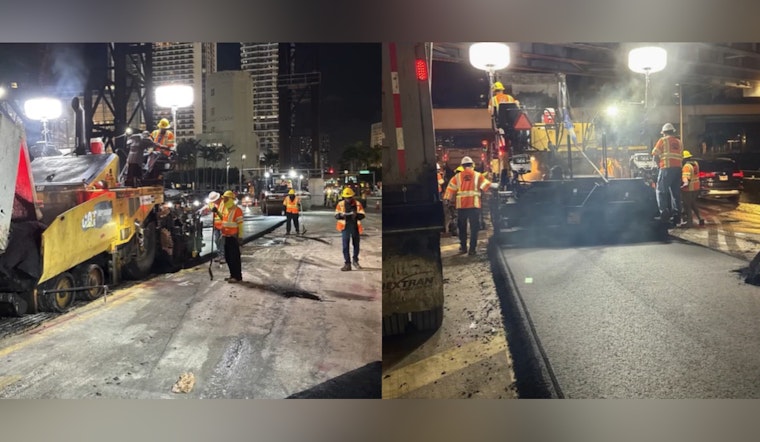
A low-lying stretch of Biscayne Boulevard now sits a full foot higher, and Miami officials are betting that extra lift will help keep floodwater off downtown streets.
The City of Miami says crews have finished paving work that raised Biscayne Boulevard between NE 11th Street and NE 13th Street by one foot. The targeted upgrade is aimed at reducing flooding from heavy downpours and seasonal king tides that routinely turn parts of the corridor into a shallow canal. The project is one piece of a broader package of drainage and roadway improvements tied to the I‑395/SR‑836/I‑95 design-build effort.
The update surfaced Tuesday when the City of Miami retweeted a post from the Florida Department of Transportation's District Six announcing that crews had "completed paving operations" on the segment, according to City of Miami. FDOT described the one-foot elevation bump as part of its drainage and resiliency work meant to keep stormwater off downtown roadways.
What the work included
The repaving and grade change are listed among drainage upgrades tied to the $866 million I‑395 "Signature Bridge" project, which has already brought new drainage pipes and a mix of daytime and overnight closures to the area. Earlier reporting by Miami Today noted that FDOT planned to raise Biscayne Boulevard from NE 11th Terrace to NE 13th Street by one foot to counter stormwater and recurring king‑tide flooding. The elevation work is one tightly focused measure within the larger design-build program.
Traffic and detours
Weekly updates on the I‑395 project website list ongoing drainage construction along Biscayne Boulevard from NE 14th Street to NE 11th Terrace and flag periodic full closures between NE 14th Street and NE 11th Terrace to allow drainage and arch foundation work. According to the project team, drivers should be ready for lane shifts and intermittent nighttime operations while crews complete tie‑in work. The website also includes maps of detour routes used during earlier closures.
Why raising roads matters
Raising road crowns and improving drainage have become standard tools as Miami deals with higher groundwater and more frequent king‑tide flooding. City stormwater and resilience materials point out that when drainage outfalls sit below high-tide levels, stormwater has nowhere to go and streets back up, which makes roadway elevation and pump upgrades key resilience strategies. City planning documents single out stretches along Biscayne Bay and nearby major roads as priority areas for these kinds of interventions.
"The elevation work is an important step toward reducing flooding caused by stormwater and king tides in the area," FDOT District Six wrote on X in the post the city shared. The City's retweet pushed that update directly to local timelines and highlighted the paving milestone.
What's next
The massive design-build effort still has years to go. Miami Today reports that FDOT is targeting late 2029 for overall completion of the project. Officials describe the Biscayne Boulevard paving as one localized checkpoint in that timeline, with more intermittent closures and tie‑in work expected as drainage and bridge components are wrapped up.
For now, residents and commuters are being urged to keep an eye on official project updates for lane‑closure notices and to build in extra time when traveling through the construction zone.





