

























































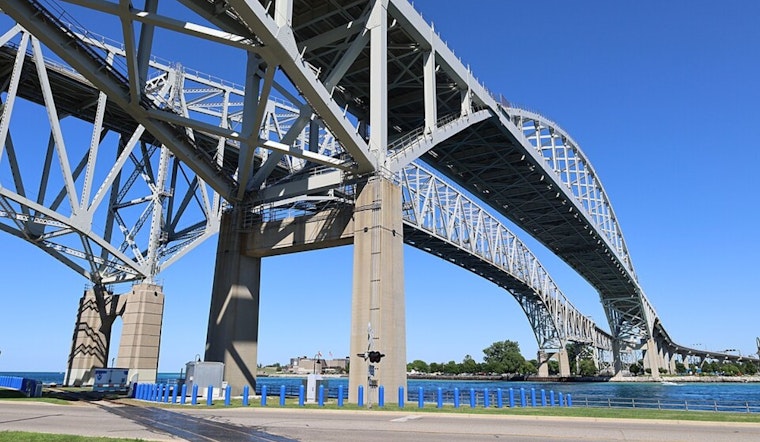
A routine trip across the Blue Water Bridge turned surreal for a Canadian retiree who says U.S. border agents swabbed his cheek for DNA, fingerprinted him, dug through his phone and then refused him entry.
Kevin Larson, 68, of Kincardine, Ontario, says the encounter on Oct. 18, 2025 ended with him being escorted back to Canada instead of continuing on into Michigan.
Retiree's Account And CBP Paperwork
According to The Detroit News, Customs and Border Protection paperwork listed the official reason for denying Larson entry as “insufficient evidence provided for the intended purpose of entry to the U.S.” Internal records reviewed by the outlet also indicate that a cheek-swab DNA sample from Larson was forwarded to the FBI’s Combined DNA Index System, known as CODIS.
Larson told reporters he was fingerprinted, had his phone searched and was never formally placed under arrest before being turned around at the Port Huron crossing. He says agents told him he could face jail time if he refused to provide the DNA sample, a choice that does not leave a lot of room for negotiation when you are sitting in a border inspection room.
CBP Policy And Broader Scrutiny
Federal privacy filings show that Customs and Border Protection and Immigration and Customs Enforcement use buccal, or cheek, swabs and submit resulting DNA profiles to the FBI’s CODIS database in qualifying cases. The Department of Homeland Security says CBP and ICE follow set protocols for collecting those swabs and transmitting profiles into CODIS. Reporting from Wired and other outlets has documented how the program has swept up migrants and, in some situations, U.S. citizens, which has in turn alarmed privacy advocates.
Lawmakers Press For Answers Before Planned Protests
Larson’s story has now landed on Capitol Hill. Reps. Debbie Dingell and Jamie Raskin have sent a letter demanding answers about his treatment and CBP’s broader DNA practices, addressing their questions to Homeland Security Secretary Markwayne Mullin, Secretary of State Marco Rubio and Attorney General Pam Bondi, according to The Detroit News.
The lawmakers filed their request just ahead of “No Kings” rallies set for March 28. They are asking for records that explain when and why border DNA samples are entered into national databases. Larson, for his part, has said he wants his cheek swab destroyed instead of sitting in a federal system.
Legal Questions
Guidance issued by CBP in December 2020 says the agency does not collect DNA from aliens held at a port of entry during admissibility consideration and not subject to further detention. Attorneys say that the distinction between brief inspection and “detention” could become a key fault line in any fight over compelled DNA sampling, according to the Department of Homeland Security.
Legal analysts note that taking DNA without consent typically requires either voluntary agreement or a warrant supported by probable cause. Forced cheek swabs can raise Fourth Amendment concerns over unreasonable searches and seizures, as outlined by Legal Clarity.
What Happens Next
It is not yet clear whether Larson’s DNA profile will be removed from federal databases or how often CBP has collected and entered samples in similar situations at land crossings. Dingell and Raskin’s letter asks Homeland Security and other agencies to hand over records that could shed light on how frequently this happens and under what authority.
On the ground around Blue Water Bridge and other crossings, the incident is already the latest flashpoint in a wider fight over how far border enforcement should go and what genetic privacy means in 2026. With protests looming later this month, that debate is unlikely to quiet down anytime soon.




