

























































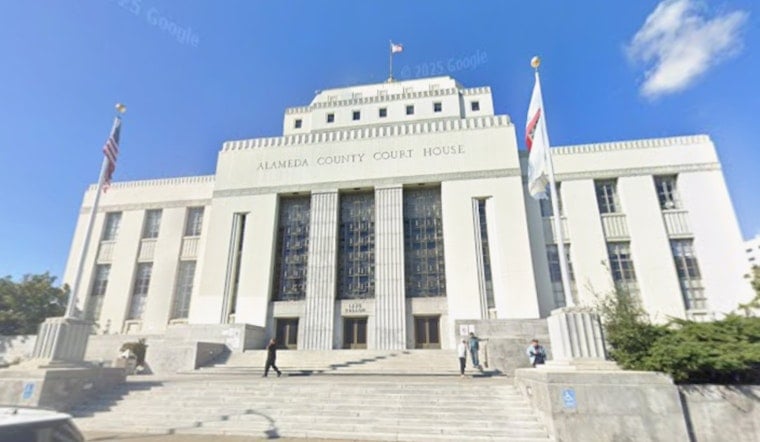
Last Friday, attorneys for a coalition of low-wealth California school districts asked an Alameda County judge to temporarily freeze roughly $3 billion in state school modernization money while their lawsuit over the state's facilities-funding formula plays out. The motion also seeks to block the distribution of about $4 billion still parked under Proposition 2 until the court or lawmakers put in place a more equitable allocation system, according to the plaintiffs.
Who Filed The Motion And Who Is Included
According to Public Advocates, the request for a preliminary injunction was filed by the nonprofit law firm, with pro bono counsel Morrison & Foerster, on behalf of students, parents, and several low-wealth districts. The filing lists plaintiff districts, including Calexico Unified, Del Norte Unified, Coachella Valley Unified, Lynwood Unified, Stockton Unified, Fall River Joint Unified, and Salinas City Elementary.
What The Plaintiffs Say
The plaintiffs contend that California's first-come, first-served matching system, combined with a uniform percentage match, effectively rewards districts with high property wealth while leaving poorer districts scrambling to fix leaking roofs and failing building systems. Public Advocates managing attorney John Affeldt warned that "Every dollar distributed under this broken system deepens the inequity," arguing that a court-ordered pause is needed to preserve funds for smaller and lower-wealth communities.
The lead plaintiff in the original complaint is Miliani Lexani Rodriguez, a Coachella Valley High School senior, according to the Palm Springs Desert Sun.
On The Ground: Leaky Roofs, Mold And Out-Of-Service Restrooms
Plaintiffs describe years of deferred maintenance that they say is now catching up with them in ways students cannot ignore. Their filings point to asbestos, black mold, broken HVAC systems, and unsafe playgrounds as examples of how deteriorating facilities can interfere with learning.
Fall River Joint Unified Superintendent Morgan Nugent said his century-old buildings "look good on the outside but with infrastructure that is falling apart," and a Salinas teacher texted that "Restrooms went out yesterday again (in the main building)," as reported by SFGATE.
How The Bond And Allocation System Works
The state School Facility Program typically requires local districts to come up with about 40% of modernization costs, with the state covering a large share of the rest. Critics say that setup naturally favors districts that can pass large local bonds and tap higher property values, while districts with less wealth struggle to qualify for matching funds at all.
The Center for Cities + Schools at UC Berkeley found that districts with the highest assessed property value per student received roughly 2.5 times more modernization funding per student than the poorest districts. Advocates argue that modest changes made under Prop. 2 do not meaningfully close that gap. For background on the $10 billion Proposition 2 bond and how the money is designated for K-12 schools and community colleges, see an explainer at KPBS.
What Happens Next
The plaintiffs have asked the Alameda County Superior Court to move quickly, and a hearing is expected in the coming weeks that could be set for May, according to reporting. The requested injunction would not affect an initial batch of modernization projects already signed off on by the Office of Public School Construction, covering roughly $900 million in early approvals. It would, however, halt further allocations and could force a swift political response from Sacramento if the judge decides to preserve the remaining funds, as reported by SFGATE.
If the court freezes additional money, districts that have been counting on state matches could face new delays, while low-wealth districts continue pressing for a formula that puts need ahead of property wealth. Lawmakers and the governor's administration would likely have to choose between negotiating changes, pursuing a settlement, or litigating a test case that could shape how California spends billions on school facilities for years to come.





