

























































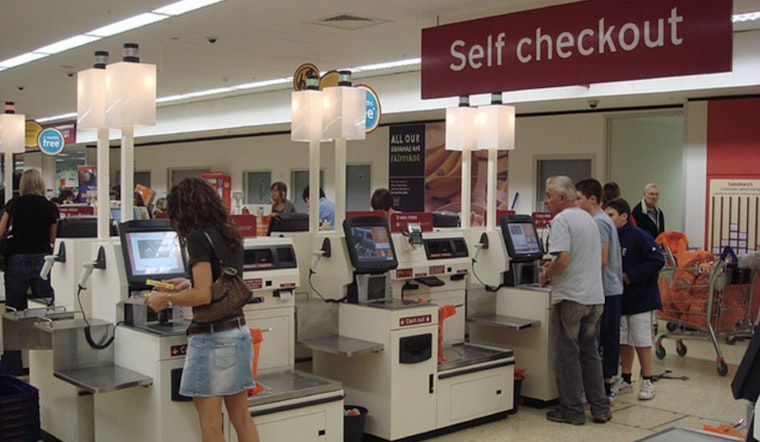
New Yorkers who love rolling into the express lane with a full cart might want to pay attention. City lawmakers are considering a new ordinance that would cap self‑checkout purchases at 15 items and require one worker to keep an eye on every three self‑service kiosks in grocery stores and pharmacies. Supporters say the move is aimed at curbing retail theft and keeping more staff on the floor, while critics warn it could slow lines and push up costs for both shoppers and small retailers.
What's in the bill
According to the NYC Council, the proposal, Intro 729, would require food retail stores and pharmacies to staff self‑checkout areas at a ratio of one employee for every three kiosks and to impose a 15‑item maximum for self‑checkout purchases. The measure lays out civil penalties that start at a $100 fine per affected employee for a violation and rise by $100 per employee per day if the problem is not fixed, up to a ceiling of $1,000 per employee per day. The Department of Consumer and Worker Protection would be responsible for enforcement and rulemaking, and the bill has been referred to the Council's Consumer and Worker Protection committee with a long list of co‑sponsors signed on.
What sponsors are saying
Councilmember Amanda C. Farías, who is leading the charge on the bill, told PIX11 that "this is to help address some of the real problems in our communities" and said she believes the rules will "curb retail theft." Backers argue that posting more staff near the kiosks means more sets of eyes to spot organized theft and more hands available to help shoppers who get stuck at the machines.
Statewide crackdown provides context
The City Council debate is unfolding as state leaders ramp up their own efforts against organized retail crime. Gov. Kathy Hochul's office has pointed to a State Police Organized Retail Theft Task Force and enforcement funding that the state says have recovered millions of dollars in stolen merchandise and driven down certain measures of retail theft. A press release from Gov. Kathy Hochul's office highlights both significant recoveries and year‑over‑year drops in some theft statistics, offering a statewide backdrop to the city proposal.
Other cities have tried similar rules
New York is not the first to tinker with life at the self‑checkout. Cities across California have tested staffing mandates and item caps as retailers and unions push for answers on theft and worker safety. In Costa Mesa, the city council advanced a measure with staffing and item limits, as reported by the Los Angeles Times, while Long Beach officials have examined a three‑to‑one staffing model for banks of self‑checkout kiosks, according to local coverage. Taken together, the moves show New York stepping into a broader national debate over how far automation should go at the register and how many people should still be standing nearby.
Reaction from workers and retailers
Labor groups have generally welcomed measures that keep more workers on the floor. The United Food and Commercial Workers union has supported staffing proposals as a way to protect employees and preserve jobs in an increasingly automated checkout world. Retail trade groups have pushed back, warning that strict staffing rules could tie managers' hands when deciding where to put workers and might hit smaller grocers the hardest, a concern that has surfaced in fights over similar rules elsewhere.
Enforcement and next steps
The bill was introduced on March 10 and is now parked in the Council’s Consumer and Worker Protection committee. It will have to clear committee hearings and then win approval from the full Council before anything changes at the checkout line. If it passes, the Department of Consumer and Worker Protection would be tasked with writing detailed enforcement rules and administering the civil penalty schedule, according to the Council agenda and legislative record.
Whether the city pulls the trigger on the proposal will likely come down to committee testimony and how lawmakers weigh convenience for shoppers against safety and staffing concerns for workers and small businesses. For now, the measure has put self‑checkout, and who supervises it, squarely on the local political agenda.





