

























































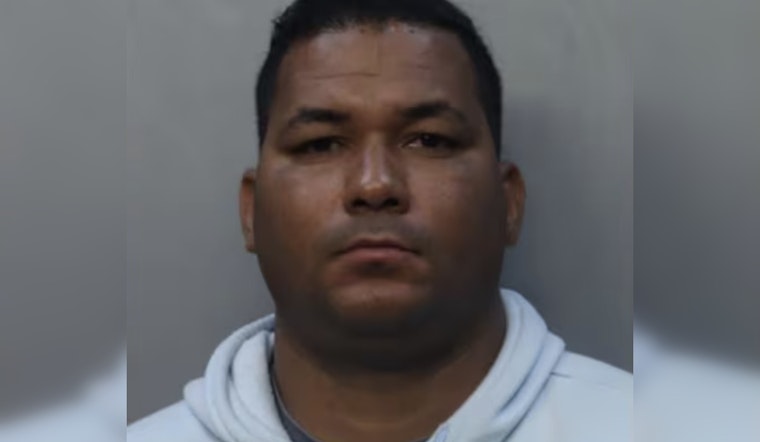
Miami-Dade deputies say a Thursday arrest near Cutler Bay wrapped up a Zelle scam that started with a phone call that looked and sounded like it came from a real bank. According to investigators, a caller pretended to be bank staff, used a spoofed phone number and leaned on fear and urgency to pressure a woman into sending $1,000 through the Zelle payment service. Deputies detained the suspect at his apartment and later booked him into the county jail.
Jail records identify the suspect as Leandro Sanchez Leyva, 33, a Cuban national who lived near Cutler Bay, and show he is facing four felony charges and an immigration hold, as reported by WPLG Local 10. According to the sheriff's report, deputies say Sanchez posed as a representative of Atlanta-based Delta Community Credit Union, spoofed the credit union's phone number and "utilized fear and urgency" to get the woman to transfer money via Zelle. Investigators say bank records show the $1,000 was deposited into a Wells Fargo account and later withdrawn, and that Sanchez admitted visiting two ATMs to pull out the cash. Online county corrections records indicate he was being held at Turner Guilford Knight Correctional Center and posted a $10,000 bond.
How the 'spoof call' worked
An MDSO report cited by WPLG Local 10 says Sanchez told the victim her USAA Bank account had been hit with fraudulent transactions and that a full-scale takeover was in progress. According to the report, he then urged her to use Zelle "to curtail and prevent fraud." The woman told detectives she felt "deceived" by what she described as a "sophisticated" impersonation. Deputies say that pairing a familiar-looking caller ID with aggressive, high-pressure language is a common move in these kinds of schemes.
Why Zelle scams keep succeeding
Person-to-person payment systems remain popular with fraudsters because transfers move quickly and are often irreversible, which gives victims little time to pull their money back once it is gone. The Consumer Financial Protection Bureau has taken enforcement action and publicly flagged problems with the Zelle network, and national reporting has documented large consumer losses on P2P platforms, illustrating why impersonation scams remain common, according to the AP. Investigators say those structural issues mean scammers can profit quickly from a single successful call.
How to protect yourself
If you get an unsolicited call about supposed trouble with your bank account, law enforcement and regulators say the safest move is to hang up and call your bank using a number from your statement or the bank's official website, not a number the caller gives you. The FBI and other agencies advise never transferring money to anyone who is pressuring you on the phone, to independently verify any suspicious request and to report fraud to local law enforcement and the FBI's Internet Crime Complaint Center (IC3) for investigation and tracking, per the FBI.
What's next
Sanchez faces counts that include organized scheme to defraud, grand theft, fraudulent use of personal identification information and communications fraud, and his case is under investigation by Miami-Dade detectives. Because of the immigration hold, it is unclear whether bond will secure his release for any extended period, and prosecutors will decide charges as the sheriff's office forwards the case.
Investigators asked anyone with information about the case to contact Miami-Dade detectives. If you suspect you or someone you know has been targeted by a spoofing or P2P scam, authorities say to contact your bank immediately and file a report with IC3 to help investigators track and stop similar schemes.




