

























































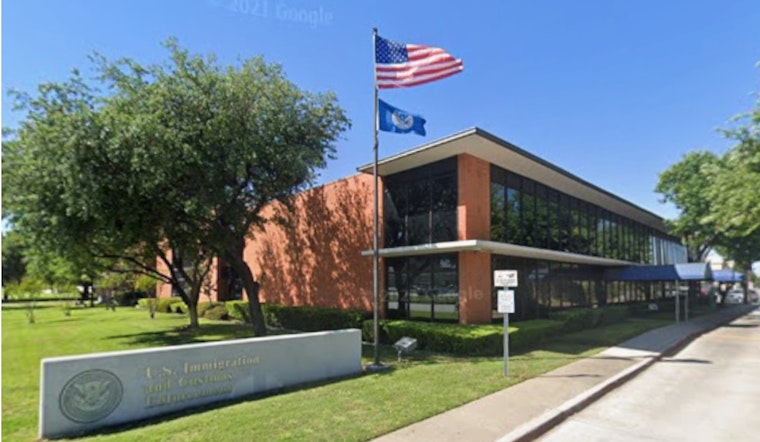
Rep. Marc Veasey walked through the U.S. Immigration and Customs Enforcement field office in Dallas yesterday, stepping back into the same processing center that turned into a crime scene after a rooftop shooting last September. The North Texas congressman said he made the trip to address community concerns about how migrants are held and processed, putting fresh political and public pressure on a facility that has already become a flashpoint for advocates and local officials.
Veasey said he saw people in the middle of intake, including “people getting their fingerprints, DNA swabs,” and described a room that looked “probably just recently power-washed,” according to CBS News. He raised concerns that some migrants might be held longer than ICE policy allows and said detainees were not being provided undergarments, problems he argued need to be fixed. Veasey also questioned transfers of children from North Texas to the family detention site in Dilley near San Antonio.
Rooftop Shooting Still Shadows Dallas Facility
The visit came months after a Sept. 24, 2025 attack in which a gunman opened fire from a nearby rooftop, killing one detainee and wounding others in what federal investigators called a targeted assault, according to The Dallas Morning News. The shooting led to a higher threat posture at ICE facilities across the country and prompted an FBI probe into the shooter’s motive, AP reported. The episode has kept the Dallas processing center in the spotlight as officials try to explain how it operates and who can get inside.
Dilley Transfers Stir Family Detention Fight
Veasey’s questions about children being moved to Dilley tap into a long-running fight over family detention. The South Texas Family Residential Center in Dilley was reopened last year and has for years drawn criticism from advocates, according to The Texas Tribune. Critics say locking up families complicates access to lawyers and undermines children’s welfare, while supporters argue that centralized facilities make it easier to manage heavy caseloads. Those competing views make the transfer of families from local processing centers a politically fraught and legally sensitive issue.
ICE Response And The Bigger Picture
ICE has defended its enforcement priorities and, according to CBS News, told reporters that nearly 70 percent of its arrests involve people who have been charged with or convicted of a crime in the United States. CBS News also reported that it contacted ICE ahead of Veasey’s tour and was told officials would not respond before its story was published. For local leaders and advocates, the trip highlighted how basic custody questions and serious security worries are still colliding at the Dallas site.
Veasey said he toured the facility to push for answers and to press for fixes to the problems he observed. As debates over oversight and safety continue, the Dallas ICE office is likely to remain a focal point for lawmakers, advocates and residents watching how the agency balances enforcement with the treatment of people in its custody.





