

























































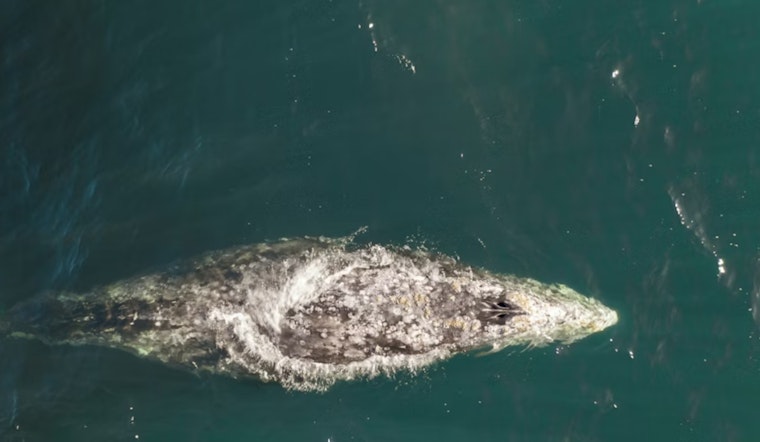
A gray whale was found dead and floating in San Francisco Bay near the Golden Gate Bridge on Tuesday, then towed to Angel Island for examination. The discovery marks the Bay Area’s first confirmed whale death of 2026, and officials quickly urged the public to keep clear while scientists collect samples. Crews on the water and on shore are now working in tandem to figure out what happened and to protect any evidence that could be critical for lab tests.
The Marine Mammal Center has already logged the case in its 2026 whale-stranding records and confirms that the animal was brought to Angel Island State Park while a necropsy is pending. The center’s cetacean team routinely gathers skin and tissue samples for laboratory analysis, both to determine cause of death and to feed long-term research on whale health. According to The Marine Mammal Center, data from these responses also inform work on vessel safety and broader conservation decisions.
As reported by KRON4, the whale was first spotted floating near the Golden Gate at about 9 AM. Partners with the U.S. Coast Guard and the U.S. Army Corps of Engineers then helped tow the carcass to Sand Spring Beach at Angel Island State Park. KRON4 notes that initial skin and tissue samples were collected from a research vessel, and that officials have not yet released the whale’s age class, sex, length or overall condition while tests are underway. The outlet also reported that a joint necropsy took place yesterday.
Early-Season Sightings Raise Questions
Scientists have already been watching gray whales in the Bay with unusual interest this winter. Multiple individuals have been turning up early and sticking around near Angel Island and the Golden Gate instead of simply passing through on migration. As SFGATE reported in February, field teams photographed and tracked several animals in January and February, sparking questions about whether the Bay is being used more for feeding or resting. With that backdrop, any confirmed gray whale death inside Bay waters lands with extra weight for researchers and mariners alike.
How This Fits a Worrying Trend
On a larger scale, the picture for eastern North Pacific gray whales is not exactly rosy. Federal counts show the population is still depressed. NOAA Fisheries has reported 2025 abundance and calf estimates that remain far below pre-2019 levels, and scientists have tied an earlier unusual mortality event to changes in Arctic and subarctic feeding grounds. That context, including lower calf production and evidence of malnutrition in some necropsies, is why experts keep pushing for thorough tissue testing and careful forensic work whenever a whale turns up dead in the Bay. Those necropsies help separate human-caused factors like vessel strikes from environmental drivers such as food shortages.
What Investigators Will Look For
Responders examining the Angel Island whale will be checking for blunt-force trauma, entanglement, signs of malnutrition and disease, and will collect tissues for toxicology and pathological testing. According to KRON4, a joint necropsy was done yesterday, with timing dependent on partner availability and conditions on the water. Lab results can take anywhere from several days to a few weeks, but they are a key piece of the puzzle for scientists and resource managers trying to cut down on future deaths.
Officials are asking the public to give any live or dead marine mammal plenty of space and to report sightings instead of trying to get close. For reporting instructions and the correct contacts, people are directed to the Marine Mammal Center’s reporting page, where the center and its partner networks can triage responses and later share findings. Keeping a safe distance not only protects people, it also preserves the evidence scientists need to understand what is happening to gray whales in Bay waters.



