

























































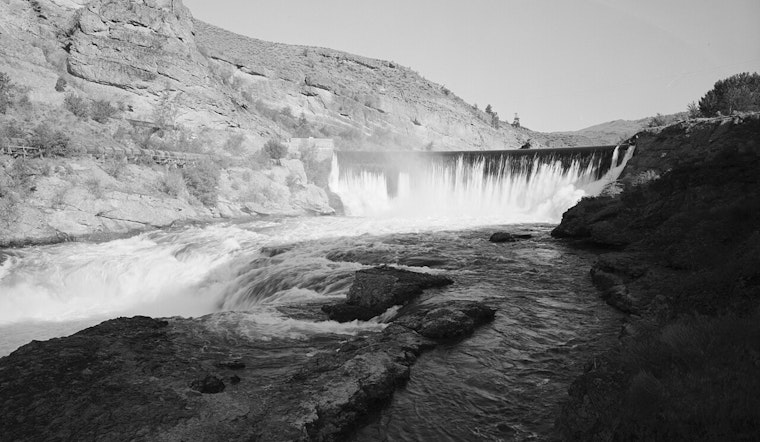
The long-dormant Enloe Dam on the Similkameen River may finally be on the clock. A new feasibility study says taking the structure out is technically doable and could reopen roughly 1,500 miles of cold-water habitat for salmon and steelhead. The report lays out several removal and sediment-management options with costs running from the low tens of millions to well over $200 million, and it flags sediment contamination, permitting and liability as the biggest hurdles. Tribes, conservation groups and federal agencies now face a tight, multiyear checklist to work through before any demolition gear shows up on the riverbank.
Study completed, but not a green light
The Enloe Dam Removal Feasibility Study wrapped up this year and concludes that full removal is technically feasible, while carefully stopping short of any promise to move into construction, according to the Enloe Feasibility Assessment. Trout Unlimited says it and the Confederated Tribes of the Colville Reservation hired Stantec Consulting Services to lead the technical work and keep stakeholder outreach going as designs evolve, per Trout Unlimited.
How much habitat is at stake
The U.S. Fish & Wildlife Service estimates that removing Enloe could reopen about 1,520 miles of cold-water habitat to anadromous fish, including high-elevation refuges that matter for threatened Upper Columbia steelhead and spring Chinook. Those upstream reaches are seen as increasingly important as warmer temperatures push lowland streams toward the edge under climate change.
Price tags range widely
The study modeled several alternatives and came up with a wide spread of potential budgets, largely tied to how much reservoir sediment gets dredged versus left to move on its own downstream, as reported by Clearwater Times. That outlet reports study figures that start at roughly $26 million on the low end and climb toward an aggressive dredging option that could approach $210 million.
Sediment is the wildcard
What to do with the sediment stacked up behind Enloe sits at the center of the technical debate. Options range from allowing much of the material to move downstream on its own to heavy dredging and engineered disposal. Field work and bathymetry in 2024 led to updated estimates, with sampling suggesting about 560,000 cubic yards of material in the reservoir and study scenarios modeling dredging between roughly 64,200 and 160,000 cubic yards in some alternatives, according to Methow Valley News. The report singles out the finer-grained portions of the sediment, where arsenic from historic mining tends to concentrate, as the main ecological concern that would require special handling.
Legacy data and contamination concerns
Older investigations by the U.S. Geological Survey put earlier sediment estimates far higher, with work in the 1970s pointing to roughly 1.8 million cubic yards. To reconcile that gap, the feasibility team ran targeted coring and geophysical surveys, according to the U.S. Geological Survey. USGS also emphasizes the need to test for trace elements such as arsenic and mercury before managers decide how much sediment can be safely released downstream.
Federal funding and precedent
Part of the feasibility work has been underwritten by federal grants, with NOAA directing about $2.3 million to Enloe planning under its barrier-removal program, according to NOAA Fisheries. For a sense of scale, other dam removal efforts in the region run the gamut. The four-dam Klamath project has been budgeted at roughly $450 million, according to the Klamath River Renewal Corporation, while Elwha ecosystem restoration is commonly cited at about $325 million in congressional summaries. Smaller efforts, including the Condit removal on the White Salmon River, came in near $32 million, according to reporting in The Seattle Times.
Tribes, the PUD and local reaction
Tribal governments have been pushing for a free-flowing Similkameen for years. The Lower Similkameen Indian Band passed a resolution supporting Enloe’s removal in 2015, and the Confederated Tribes of the Colville Reservation are co-managing the current assessment, as reported by Clearwater Times. The Okanogan County Public Utility District, which owns Enloe, has made clear it does not plan to foot the removal bill and has called for a dedicated removal entity that would indemnify the district and sort out riverbed ownership and easements, Methow Valley News reports. Those legal, property and funding questions are poised to determine whether the feasibility findings ever turn into a signed-off removal plan.
Next steps and a long runway
With the feasibility report and appendices now posted online, the project team says the near-term work involves more sediment testing, advancing design to about 30 percent, securing permits and lining up money for construction, according to the Enloe Feasibility Assessment. Project leads say that list, especially the sediment chemistry and liability pieces, will ultimately shape any realistic timetable for demolition and restoration on the Similkameen.





