

























































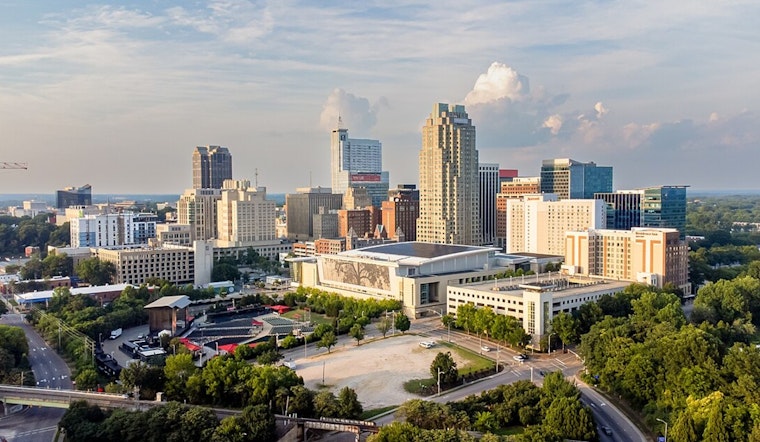
Downtown Raleigh is seeing far fewer crashes involving people on foot, according to city records, which show 71 pedestrian-involved crashes in 2017–2019 compared with 39 in 2021–2023. The shift follows the January 2019 death of state employee Anne Hakenewerth and a multi-year effort to make central Raleigh safer for people walking. City leaders say the early trend is promising, while also warning that weak enforcement and unfinished projects mean the work is far from done.
The Downtown Pedestrian Safety Project has been rolled out in stages. In September 2022, the City Council voted to drop the posted speed limit across the downtown core from 35 mph to 25 mph. The following year, staff added leading pedestrian intervals at signals, eliminated many dual-turn lanes and installed new "no right on red" signs. The package and its timeline are summarized in the city manager's update, which lays out Phase 1 measures and notes that Phase 2 will focus on mid-block crossings, according to the manager's update.
City-provided crash numbers shared with local reporters highlight the drop in raw counts. WRAL Investigates reported that the city data show 71 pedestrian-involved crashes in 2017–2019 versus 39 in 2021–2023, and a city traffic engineer told the station the reduction is driven "primarily" by the lower speed limit. State officials also point to outreach such as WalkSmart NC, a campaign launched in late 2019 to educate drivers and pedestrians, according to OSHR.
Enforcement and compliance
Even with the new signs and signal timing, enforcement downtown has been light. The Raleigh Police Department told WRAL that officers have issued fewer than 10 citations for illegal right turns on red since the new restriction took effect. That lack of tickets, paired with everyday reports of drivers rolling through those red lights anyway, has some pedestrians on edge. "People are turning on red and they are not supposed to, so you just have to be very cautious about it," Kayla Evans told WRAL.
Why lower speeds matter
Safety engineers say the speed changes are not just about comfort. Lower impact speeds sharply cut the chances that a person hit by a vehicle will be killed or seriously injured, a relationship backed by federal research. The Federal Highway Administration notes that vehicle speed at impact is one of the strongest predictors of how badly a pedestrian will be hurt, so lower posted limits are often paired with signal and crosswalk upgrades. Case studies from NCDOT highlight that leading pedestrian intervals are a low-cost, high-impact tool that gives people walking a head start and reduces conflicts with turning vehicles; FHWA and NCDOT outline the evidence.
What’s next downtown
City officials say Phase 2 of the Downtown Pedestrian Safety Project will concentrate on roughly 20 uncontrolled mid-block crossings and is scheduled to begin construction in fall 2026, as crews finish other signal and lighting upgrades. The Transportation Department is also testing more eye-catching tactics, including pedestrian-safety murals and raised crosswalks, to slow drivers and boost visibility. The city's Vision Zero materials and pedestrian-safety pages lay out timelines and project details, and pedestrian-safety murals are listed among the recent initiatives.
The early data offer a cautious dose of optimism, but both officials and people walking downtown say the verdict is not in yet. Continued monitoring, stronger enforcement and targeted engineering fixes at trouble spots will determine whether the decline in crashes holds as downtown activity keeps ramping up.




