

























































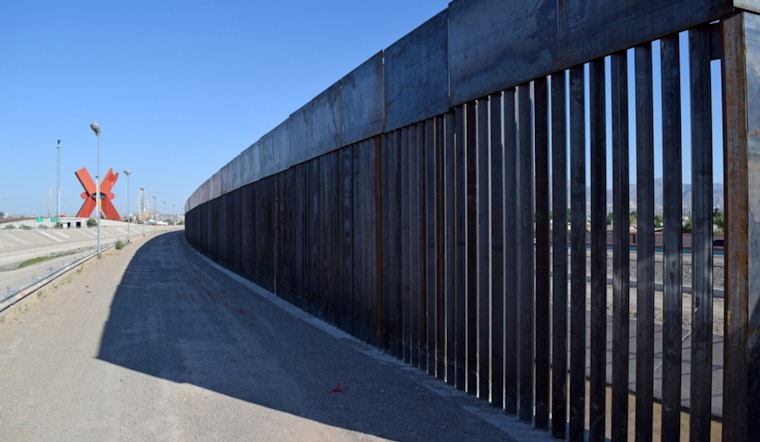
An El Paso emergency physician who has spent years patching up migrants along the US-Mexico line says what he is seeing is no freak accident of geography, but the predictable outcome of political choices. Dr. Brian Elmore, who splits his time between a mobile clinic and the region’s level-one trauma center, describes a steady flow of patients with catastrophic injuries from high falls, razor-wire lacerations, and near-drownings that leave people facing multiple surgeries and long, painful recoveries.
Elmore helped launch a binational clinic, clínica Hope, to care for people stuck on the Mexican side of the border and in shelters. He told The Guardian that he has treated more than 100 patients whose injuries were tied to attempts to scale the barrier. According to the Hope Border Institute, clínica Hope opened at the end of 2022 to deliver mobile and shelter-based care in Ciudad Juárez and to provide follow-up for people who need hospital treatment on the U.S. side.
Hospitals Say The Bill Has A Price Tag
Border trauma doctors are also calling attention to the financial fallout. In testimony to Congress, UC San Diego neurosurgery resident Dr. Alexander Tenorio told a House subcommittee that hospital costs linked to border-fall injuries at his center jumped from about $11 million before the wall-height increase to roughly $72 million afterward. Congress.gov and related peer-reviewed papers lay out both the clinical severity and the mounting economic burden.
El Paso Data Show Sharper Injuries Since 2018
A retrospective review of University Medical Center of El Paso trauma-registry records found a steep rise in border-wall fall admissions after 2018, along with markedly higher injury severity and longer hospital stays. The peer-reviewed analysis in Injury Epidemiology concluded that incidence, Injury Severity Score, and length of stay all increased after the wall was raised, a pattern clinicians say translates directly into more operations, more intensive-care time, and greater public-hospital expense.
Federal Spending Is Leaning Into Harder Enforcement
Those clinical and cost numbers are surfacing just as Congress has signed off on a sweeping budget package that sends large sums into immigration enforcement and border infrastructure. The package includes tens of billions earmarked to finish and expand border barriers, and news organizations reported roughly $46.5 billion targeted specifically for wall construction. AP detailed the line items, while analysis of the bill estimates that overall, multi-year enforcement and border-security spending reaches into the hundreds of billions. Advocates and policy analysts have framed the totals in somewhat different ways in public reporting, but no one disputes the scale.
Clinicians Say Prevention Would Be Cheaper And Less Cruel
Local doctors and researchers argue the pattern is straightforward: taller, more imposing barriers mean higher falls and more complex trauma. They point to the financial strain on hospitals and to state border initiatives that have also driven up costs. Texas’s Operation Lone Star alone has consumed billions in state spending, according to reporting on state budgets and local impacts. The Dallas Morning News has put the state tab at roughly $11 billion since the program began in 2021, a figure public-health advocates say adds to the pressure on border health systems.
What It Means Locally
For clinicians on the front lines, the mix of taller barriers, tougher enforcement, and shifting migration routes has turned what used to be routine trauma call into recurring humanitarian triage. Doctors who treat these patients say the clinical picture they see daily, from crushed spines and traumatic brain injuries to complex reconstructive needs, argues for prevention, cross-border care coordination, and funding that backs health services alongside security spending. Whether lawmakers will redirect resources toward those upstream fixes remains at the heart of the political fight that sits behind the statistics and the bedside stories that physicians like Elmore bring back to the hospital.





.png)