

























































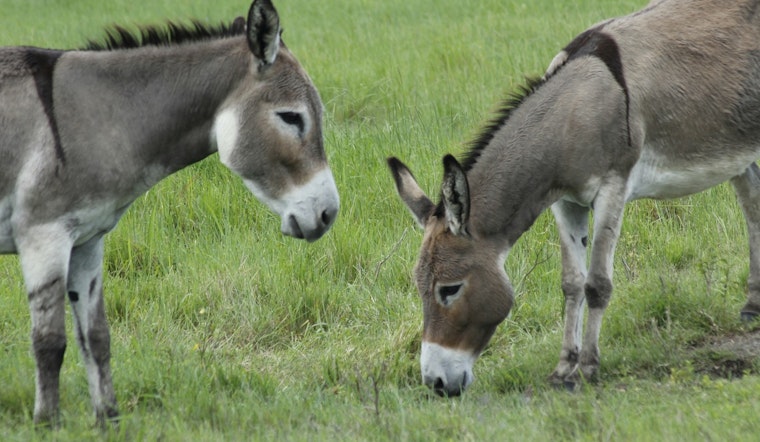
More than 1,000 wild burros that roam the rocky hills and shorelines around Lake Pleasant are slated for removal as federal land managers move to sharply cut the local herd. Officials estimate roughly 2,300 animals are currently in the area and want that number down to about 140 to 250, a dramatic reduction they say is aimed at cutting collisions and protecting the desert’s already stressed vegetation.
BLM signs off on herd plan
The Bureau of Land Management signed off on an updated Lake Pleasant Herd Management Plan on March 5, 2026, setting an official appropriate management level of 140 to 250 burros and calling for a mix of gathers and fertility control to get there, according to the Bureau of Land Management. The agency says the Lake Pleasant Herd Management Area covers about 103,000 acres of federal, state and private land, with an estimated 2,303 burros in and around the HMA. In approving the plan, officials framed the effort as a way to keep burro herds healthy while conserving resources and protecting public health and safety.
Local advocates push back
Rescue groups and advocates argue that pulling that many animals off the land will be traumatic and only a short-term fix. Soleil Dolce, vice president of the Arizona Equine Rescue Organization, told FOX 10 Phoenix that nearby development has squeezed traditional burro territory and helped drive a rise in car strikes and neighborhood encounters. Advocates say a stronger focus on fertility control, better right-of-way fencing and tighter habitat protections could lower conflicts without large-scale roundup operations.
What happens to the removed animals
Under the plan, burros that are taken off the range will be shipped to holding facilities and offered for adoption, and fertility control will be used to slow future growth, according to an environmental assessment from the Bureau of Land Management. Agency documents explain that gathers are deployed when herd numbers threaten public safety or rangeland health, and that removed animals typically receive veterinary checks before being cleared for adoption or transfer to private care. Officials reiterate that adoption and other off-range placements are preferred over indefinite government holding.
Ecology and road safety behind the push
Biologists warn that burros can damage slow-growing saguaros and other key plants that support Sonoran Desert biodiversity, a concern detailed in reporting by Cronkite News. Transportation and safety research has also flagged recurring burro-vehicle collisions as a local hazard, and technical studies from state transportation officials outline options for cutting those crashes while still protecting the animals.
Legal framework
Wild burros fall under the Wild and Free-Roaming Horses and Burros Act of 1971, which instructs federal agencies to maintain a “thriving natural ecological balance” and allows removal of “excess” animals in specific situations, according to the Legal Information Institute. That law authorizes the Bureau of Land Management to designate herd management areas and use a mix of gathers, fertility control and adoption programs when it determines action is necessary.
What to expect next
The BLM’s Hassayampa Field Office will set the detailed schedule as gathers are planned and permits are finalized. In the meantime, visitors to Lake Pleasant are urged to give burros plenty of space, avoid feeding them and follow guidance from local agencies while management work is underway.





