

























































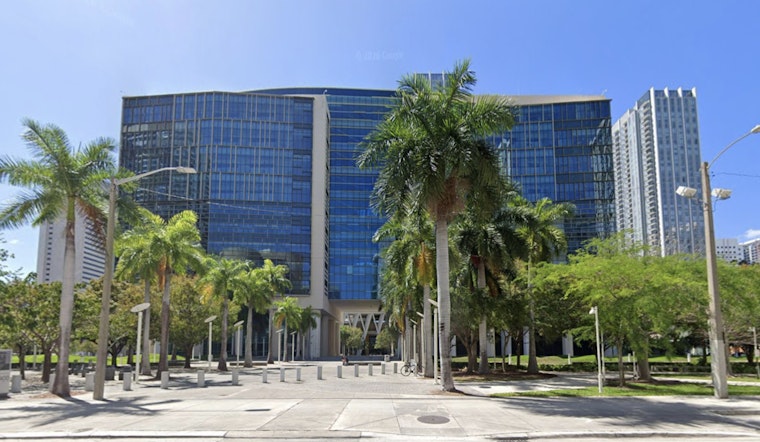
A Fort Lauderdale man who admitted running a multimillion dollar Covid relief loan scam has now lost something far bigger than cash. A federal judge has stripped him of his U.S. citizenship after finding he lied during the naturalization process while his fraud scheme was in full swing, a case that prosecutors say highlights stepped up enforcement against pandemic era fraud in South Florida.
Judge Revokes Citizenship After Government Motion
U.S. District Judge Rodney Smith entered an order revoking the citizenship of Joff Stenn Wroy Philossaint after federal prosecutors argued he illegally obtained naturalization by hiding his criminal conduct. U.S. Attorney Jason A. Reding Quiñones said the move "restores accountability" and that U.S. citizenship "must be earned honestly." The court granted the government’s motion on Feb. 23, and the decision was publicly announced on March 17, 2026, according to the U.S. Attorney's Office, Southern District of Florida.
Prison Time, Restitution And A Partial Win On Appeal
Philossaint had earlier pleaded guilty to conspiracy charges tied to the Covid relief loan scheme, and on June 26, 2023, the district court sentenced him to 50 months in federal prison. The judge also ordered about $3.85 million in restitution and entered a forfeiture judgment connected to the fraud proceeds.
That forfeiture order did not fully survive appellate review. In a July 2, 2025 opinion, the Eleventh Circuit vacated the forfeiture judgment in part and sent the case back to the trial court for further proceedings on the forfeiture calculations, according to the published opinion from the U.S. Court of Appeals, 11th Circuit.
How Prosecutors Say The Covid Loan Scam Worked
According to federal prosecutors, Philossaint and several co conspirators spent more than a year milking emergency relief programs intended to keep struggling businesses afloat. Between April 2020 and May 2021, they prepared and submitted about 40 fraudulent Paycheck Protection Program (PPP) and Economic Injury Disaster Loan (EIDL) applications, which brought in roughly $3.8 million in loan proceeds.
Investigators say Philossaint personally pocketed about $549,000 in loan money and kickbacks. He allegedly used companies under his control to submit applications that inflated payroll and revenue figures, which helped secure the federal funds.
All of that overlapped with his push to become a U.S. citizen. Federal filings state that Philossaint applied for citizenship in February 2020, then appeared for a naturalization interview on Dec. 15, 2020, where he gave sworn answers denying any criminal conduct. He was naturalized on Feb. 9, 2021, even as the scheme was unfolding, details prosecutors outlined when announcing the case, according to the U.S. Attorney's Office, Southern District of Florida.
What Denaturalization Means And What Comes Next
Denaturalization is the legal process that cancels a person’s naturalization if the government proves citizenship was illegally obtained or secured through willful misrepresentation. The standards and grounds for that kind of case are spelled out in the USCIS Policy Manual.
Once citizenship is revoked, a person can face immigration consequences, including possible removal from the United States, and any separate restitution or forfeiture issues can continue in criminal or civil courts. Local coverage of the Justice Department announcement also noted that the investigation drew in a small army of agencies, including the SBA Office of Inspector General, the U.S. Secret Service, the FBI, IRS Criminal Investigation and Homeland Security Investigations, according to CBS Miami.
Part Of A Wider South Florida Covid Fraud Crackdown
Philossaint’s denaturalization is one piece of a much larger federal push in South Florida that has produced indictments, guilty pleas and trials focused on pandemic relief fraud. Court records and appellate filings show that restitution and forfeiture questions in his case are still being hashed out in post conviction litigation, and the Eleventh Circuit has already weighed in once on the forfeiture calculation.
Related filings, along with the appellate opinion detailing the partial vacatur and remand, are part of the public record and can be found in court documents, including the opinion posted by the U.S. Court of Appeals, 11th Circuit.




