

























































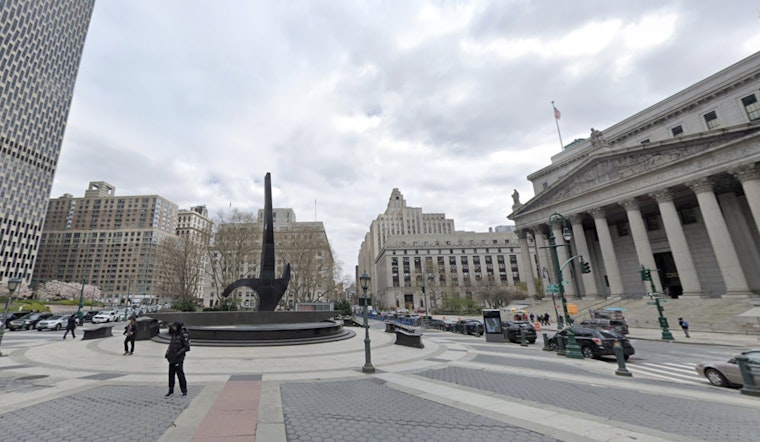
Lower Manhattan's Foley Square, the triangular Thomas Paine Park tucked by the courthouses, is looking rough. Shattered paving stones, leaning or dead lamps and trash spilling from improvised bins are turning what should be a postcard-ready civic plaza into something closer to an obstacle course, according to residents and visitors. People say they are tripping or nearly wiping out on uneven slabs, and a place once known for rallies and lunch breaks is edging into safety-concern territory.
As reported by the New York Post, on-the-ground visits and photos show sections of stonework missing, NYPD crowd-control barriers overturned and left out for days, and an improvised oil-drum trash can overflowing. The Post reports that city inspection records rated Thomas Paine Park "unacceptable" in June 2025, and neighborhood sources told the paper the situation has only worsened in recent months. The outlet also notes that the plaza was once the focus of an $18 million redesign completed around 2000, which has people now asking why basic repairs have lagged so badly.
What "Unacceptable" Means
The city uses a simple pass or fail system in its Parks Inspection Program, tagging sites as either "Acceptable" or "Unacceptable." Inspectors look at cleanliness, paved surfaces, lighting and other features to determine whether a park needs attention. A single serious hazard can be enough to trigger an "Unacceptable" rating, or multiple smaller problems can push a site over the line. Those ratings are supposed to help guide maintenance crews and shape long-term capital planning. See the agency's Parks Inspection Program for how sites are evaluated and prioritized.
A Once-Refreshed Plaza
Foley Square did not always look this beat up. It was extensively redesigned and reopened in 2000 with federal, city and utility contributions that together totaled roughly $18 million, according to a city press release announcing the project's completion. That overhaul created a two-tiered plaza, a black-granite amphitheater and new public artworks meant to cement the square as a civic gathering place. Two decades on, some of those features now appear weathered and in need of attention. The 2000 city press release spells out the project's scope and the partners that helped fund it.
Protests And The Public Life Of The Square
Foley Square has long doubled as downtown's rallying ground, hosting major demonstrations that have ranged from Occupy Wall Street to protests tied to the Dakota Access Pipeline and immigration actions. When the space falls into disrepair, it affects court visitors, protesters and nearby workers alike. Coverage of past mass demonstrations shows how heavily the square is used as a civic hub, and local groups say visible decay undercuts its usefulness as true public space. For background on Foley Square's role in mass protests, see reporting in outlets like The Guardian and local accounts such as the Thomas Paine Association's recent write-up.
City Response And Next Steps
In a statement to the New York Post, a Parks Department spokesperson said the agency knows the site needs work and is "seeking solutions" to upgrade and restore the plaza. Advocates and auditors say Foley Square's problems fit into a larger story citywide. Reports and audits have repeatedly flagged hundreds of parks, playgrounds and bathrooms with maintenance shortfalls and unacceptable features, and those watchdog findings have fueled calls for clearer repair timelines and dedicated funding for the highest-priority hazards. For context on systemic park maintenance issues, see the NYC Comptroller's reviews of playgrounds and park facilities.
For people who live and work around Foley Square, the current state of the plaza is both a headache and a worry, a heavily used public space that they say needs a concrete maintenance plan and a real timetable for fixes. Community groups report that they plan to press elected officials and Parks Department leaders for specific commitments, and Hoodline will be watching for any updates from the agency and local advocates.





