

























































Drivers on I-394 are paying in time, and the state is paying in cash. With the reversible E-ZPass express lanes shut down for a two-year construction blitz, MnPASS is losing toll revenue that officials say can be backfilled from other transportation funds.
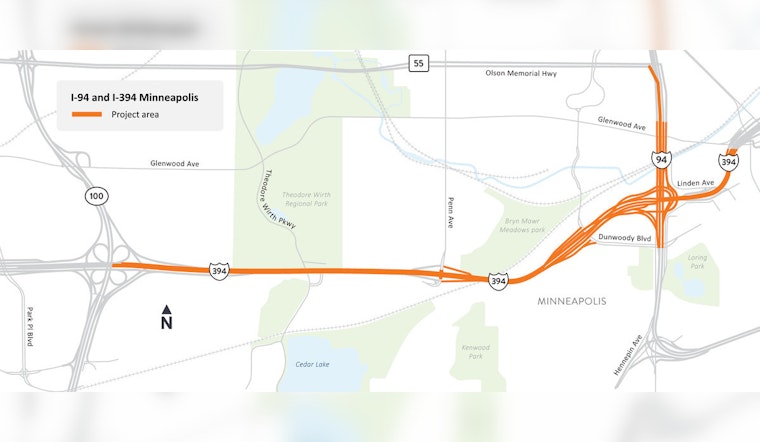
MnDOT’s I-94 and I-394 Minneapolis project, a roughly two-year, $67 million repair effort, has pushed westbound traffic into the reversible E-ZPass lanes and paused tolling on the three-mile stretch from downtown to Highway 100, according to MnDOT. The agency’s project page lays out lane and ramp closures through fall 2026 and warns of intermittent overnight shutdowns and detours. The goal is to shore up bridges and extend the life of the pavement along the busy corridor.
A seven-figure gap
Data obtained by 5 INVESTIGATES shows the I-394 E-ZPass lanes have generated more than $25.5 million since the program launched and pulled in more than $1.3 million in fiscal 2025. With the toll lanes offline, MnDOT projects it will miss out on more than $1 million in revenue during construction, KSTP reports. That shortfall matters because MnPASS toll dollars are supposed to flow back into operating and improving the same corridors where they are collected.
MnPASS finances have been strained before
Past MnPASS accounting shows the system has already been juggling tight margins. Equipment replacement cycles and operating contracts have taken significant bites out of toll receipts, with major tolling hardware swapped out and rollover balances used to keep things steady, according to the MnPASS Express Lane Financial Report. That report details how capital and operating costs affect whether individual corridors recover their costs.
Operating bills keep coming
Even with tolling on hold, the meter has not stopped running on operating costs. A 5 INVESTIGATES review of public records found nearly $1.2 million last year for tolling technology and equipment, almost $253,000 for the State Patrol enforcement contract, and more than $53,000 in utility bills for signs, KSTP reports.
MnDOT told the station it may tap up to $1.2 million in supplemental trunk-highway funds to cover those operating costs while toll revenue is down. MnDOT communications director Devin Henry described that as a “very, very small” slice of the account and said it amounted to “one-half of 1%” in 2024.
Where the backstop comes from
According to MnDOT, supplemental trunk-highway funds are part of the state’s broader highway funding structure and can be used to support MnPASS operations when toll income does not cover the bills. State law requires that toll receipts first pay for corridor costs before any remaining money is spent on transit or corridor upgrades. That gives MnDOT a legal way to move money inside its transportation accounts, although critics argue it effectively uses general driving-related revenues to subsidize a toll lane program.
What drivers should know
For commuters, the bottom line is more time in traffic. Through fall 2026, drivers should expect slower trips, overnight closures, and periodic detours while crews work on bridges and pavement. MnDOT is urging people to carpool or hop on transit where possible; Metro Transit’s Route 645 runs along the corridor and could be a workable option for some regular I-394 users.
The funding shuffle spares MnPASS from an immediate budget crisis but reopens a long-running policy fight over whether managed lanes should be self-supporting or treated mainly as congestion relief tools. For now, the state is picking up the operating tab while the I-394 construction rolls on.



