

























































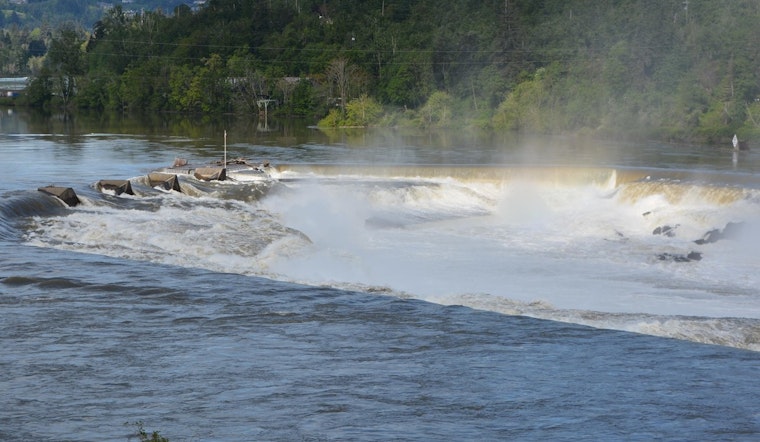
A coalition of tribes, nonprofits and civic groups is trying to pull off something that has eluded Portland-area leaders for generations: cracking open Willamette Falls for public access, tribal gathering and working river traffic again. The stretch of river has long been walled off behind hydroelectric and paper-industry infrastructure, and backers say their plan intentionally links cultural restoration with economic development, with new walkways, viewing areas and river services meant to bring people and boats back to the Willamette.
Who’s Behind The Push
As reported by KPTV, the effort is centered on Willamette Falls in Oregon City and West Linn, where the Willamette Falls Trust and partner groups say a recent infusion of state money will speed up land purchases and public-access work. Gov. Tina Kotek signed off on a $45 million appropriation for the project last year, a decision explained in coverage by OPB. Trust leaders say that funding will help acquire industrial parcels and design public amenities that reflect tribal stewardship of the site.
What The Trust Wants At The Falls
The Willamette Falls Trust, which tapped former governor Kate Brown as its president, says it plans to acquire land on the river’s west side and build public walkways, interpretive spaces and areas for cultural events. The Trust’s announcement outlines feasibility work and an early agreement with Portland General Electric as key steps toward that vision, according to the Willamette Falls Trust. Brown and other backers frame the effort as cultural restoration as much as development, and Trust renderings show viewing platforms, ceremony spaces and accessible riverfront paths meant for school groups and visitors alike.
Tribal, Cultural And Neighborhood Tie-Ins
Local organizations are treating the work at the falls as part of a broader attempt to reconnect people with the river. Ecotrust, now led by Executive Director Ronda Rutledge, describes river projects as chances to restore tribal presence and traditional ecological practices, Ecotrust says. In Portland’s central city, OMSI is pursuing a separate “Center for Tribal Nations and Waterfront Education Park” in its district to anchor tribal programming on the riverfront, OMSI reports. Farther north, the 1803 Fund is directing major investments into Albina waterfront plans that would add community spaces and river access north of downtown, as detailed by the Portland Mercury.
Locks, Commerce And The Long View
Downstream of the falls, work on the Willamette Falls Locks could determine whether the river becomes a true transportation and tourism corridor again. The locks, built in 1873 and closed in 2011, have long been the choke point separating upriver communities from markets closer to the Columbia, according to Wikipedia. Current repair and transfer efforts aim to return the locks to service. Supporters say reopening them could make the river viable again for commerce and tourism. Local groups are already sketching out how reopened locks, restored riverfronts and new public facilities might tie together tribal access, recreation and small-boat commerce into a single economic corridor, and an effort to reopen the locks is underway, KPTV noted.
Politics And What To Watch
The plan is not moving forward without friction. Some tribes, most prominently the Confederated Tribes of the Grand Ronde, have objected to the Trust’s membership and are seeking a separate role in decisions about how the falls are developed. That dispute helped prompt Gov. Tina Kotek to scrutinize the $45 million appropriation last year, according to reporting from Willamette Week. Watch for land-sale agreements with Portland General Electric, outcomes in pending litigation over fishing platforms and any formal transfer of the locks to the new Willamette Falls Locks Authority. Those steps will determine which communities see access first and who controls long-term programming. For now, leaders say the next year will revolve around due diligence, design work and negotiations that could shape public access to the river for the next generation.



