

























































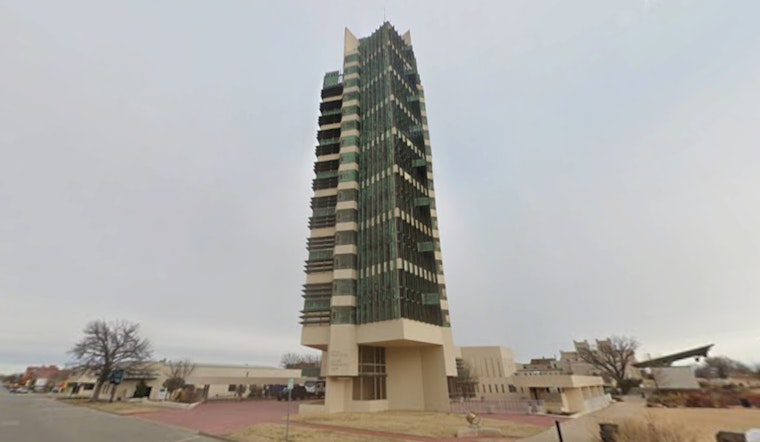
The years-long legal wrangling around Frank Lloyd Wright’s Price Tower is finally in the rearview mirror, clearing the path for a full restoration of the 19-story landmark in Bartlesville. The Frank Lloyd Wright Building Conservancy says the litigation wrapped on March 11, erasing a major uncertainty that had kept the tower dark following financial troubles and disputes over its sale. With the court fights resolved, Tulsa-based McFarlin Building LLC, which closed on the property in May 2025, can focus on stabilizing the structure and mapping out longer-term repairs.
Conservancy Says Litigation Is Over
On its website, the Frank Lloyd Wright Building Conservancy stated that “As of March 11, all Conservancy litigation related to Price Tower has been resolved,” and credited the pro bono work of Crowe & Dunlevy and Willkie Farr & Gallagher LLP. The group framed the outcome as a win for preservation and said it will continue backing McFarlin Building LLC as the new owner works to bring the tower back to life. According to Frank Lloyd Wright Building Conservancy, the organization plans to stay involved in the restoration effort.
How The Tower Got Here
Price Tower shut its doors in late summer 2024 after the then-owner said operations were no longer sustainable and controversy erupted over the sale of original furnishings. What followed was a tangle of competing sales claims, bankruptcy filings, and court orders before McFarlin Building LLC acquired the building in a court-supervised sale on May 5, 2025. The new owners moved quickly to safeguard the structure, draining standing water and restoring power within days of taking control. As reported by News On 6, those early moves were aimed squarely at preventing further damage.
Missing Artifacts And Easement Enforcement
According to the Conservancy’s timeline, several easement-protected elements were sold without its review, including a one-of-a-kind rolling tenant directory and decorative copper relief panels, prompting the group to file UCC notices and take other legal steps to stop additional dispersal. Those removals became central to the dispute because the preservation easement runs with the land and covers original fixtures as well as designated collection pieces. The Conservancy has publicly laid out the sequence of filings and demands it made to recover the items; its detailed timeline is available from the Frank Lloyd Wright Building Conservancy.
What Comes Next
McFarlin has sketched out a careful rehabilitation plan that would use historic tax credits to stabilize the landmark and adapt portions of the building for hotel and residential uses, with specific scopes and budgets still being refined. Preservation advocates say specialist-led work will be needed to protect Wright’s copper details and custom interiors as any conversion moves forward. National and international coverage has pointed to McFarlin’s track record on historic rehabilitation as a reason for cautious optimism. Reporting in Designboom and local coverage by KFOR both noted the Conservancy’s ongoing role and the new owners’ restoration promises.
Legal Notes
The preservation easement on Price Tower remains in force and will require review of future changes, a safeguard the Conservancy describes as essential to preventing further loss of historically significant elements. That protection, combined with the recent legal outcome, means McFarlin is obligated to work with preservation partners as it advances its plans, and the Conservancy has credited outside counsel for helping secure that framework. For more detail on the sale, the easement, and the early stabilization work, see coverage by Architect Magazine and Artnet News.



