

























































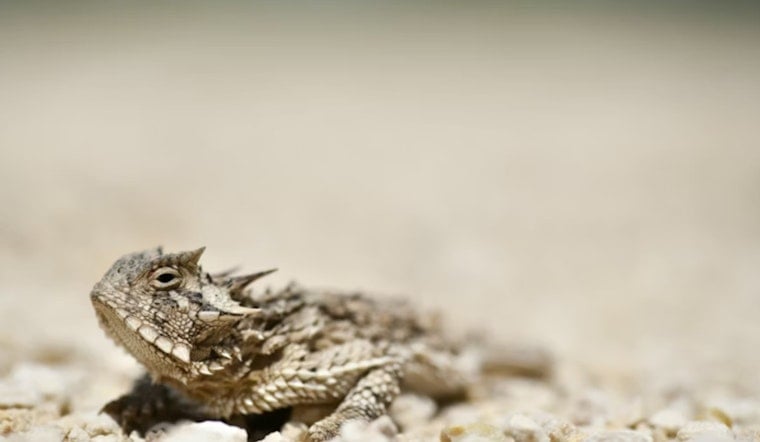
For generations, Louisiana kids could wander out to a sunny schoolyard or sandy lot, scoop up a flat, spiky “horned toad,” and head back to class with living proof of recess bragging rights. Those same animals, the Texas horned lizard (Phrynosoma cornutum), have now effectively vanished from the state’s uplands, with no recent, verifiable records on the books. Biologists say the disappearance tracks a long, regional slide in the habitats and insects the lizards depend on.
State records and what they really say
Open up the state’s own wildlife planning documents and the story gets even stranger. In the official Louisiana Wildlife Action Plan, managers concluded there is “no evidence that the species was ever native to Louisiana” and removed it from the list of concern. That single line has quietly shaped how biologists read every old horned lizard report, and how they think about any future searches or restoration efforts.
Sparse sightings and a murky backstory
The hard evidence on horned lizards in Louisiana is thin. State herpetologists point to verified records from the 1920s in Caddo Parish and a last known report from 1965 near Quitman in Jackson Parish. After that, the trail goes cold. Citizen-science databases turn up little or nothing for Louisiana, and some experts suspect a few of those early records may have come from released pets rather than wild, established populations.
A recent Lincoln Parish Journal investigation walks through those scattered records and the uncomfortable question that follows: were horned lizards ever truly part of Louisiana’s native upland fauna, or were they only occasional visitors and transplants that never really got a foothold?
Why the lizard crashed in the East
Whatever their original status in Louisiana, the broader decline of the Texas horned lizard in its eastern range is well documented. The pattern will sound familiar to anyone who follows wildlife issues. Sandy, open habitats were converted or overgrown, pesticides became widespread, and native harvester-ant populations collapsed. Those ants make up a large share of the lizard’s diet, according to the IUCN Red List.
Invasive fire ants and agricultural shifts have been singled out as particularly damaging in the species’ eastern strongholds. That double hit helps explain why remnant horned lizard populations are hanging on farther west while places like Louisiana are left with only stories and old labels in dusty collections.
Rescue work just over the border
Texas, where nobody doubts the horned lizard’s native status, has been trying to reverse the slide. Conservation programs there focus on captive breeding and carefully planned reintroductions. Zoos and state biologists have been releasing hatchlings and tracking their survival and movements on the ground.
The Fort Worth Zoo has outlined its breeding and release work for the Texas horned lizard in its conservation materials, and the Texas Parks and Wildlife Department has partnered on releases and monitoring at sites such as Mason Mountain Wildlife Management Area. Early results show encouraging signs, but they also make one thing clear. You cannot just toss lizards back on the landscape and hope for the best. Reintroduction only works when it rides alongside habitat restoration and careful ant management.
What it would take to bring them back
For Louisiana, talk of large-scale horned lizard reintroductions is still premature. Experts say the state would first need to line up the basics: sandy soils with plenty of open sun, robust harvester-ant populations, and land management that does not wipe out either. That means changing how certain properties are mowed and grazed, rethinking some pesticide use, and picking sites with precision, guided by both science and landowner cooperation.
If Louisiana ever decides to move horned lizards across the border, the protocols refined in Texas will be crucial. Release strategies, monitoring methods, and habitat prep would all likely be borrowed, then adapted for local conditions.
“We’re seeing the first signs of stabilization and even growth in certain release sites,” a wildlife biologist told the Lincoln Parish Journal, a reminder that recovery is possible but slow. For now, the Texas horned lizard in Louisiana is more ghost story than field sighting, a small and spiky symbol of bigger upland changes and a test of whether cross-state conservation can knit those fragments of recovery into something lasting.




