

























































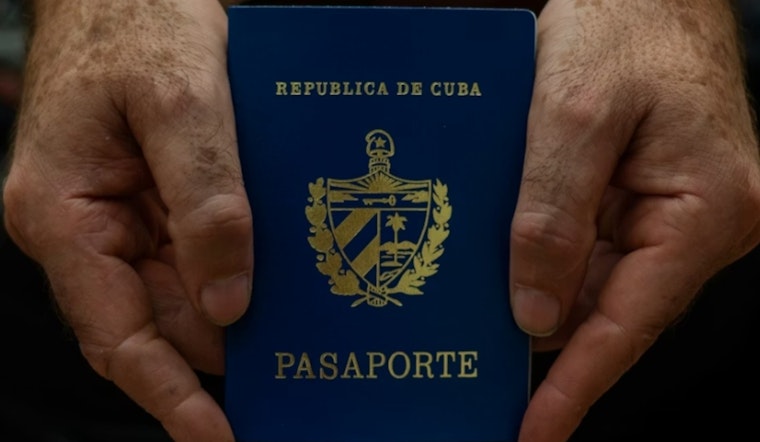
Cuban immigrants across South Florida are taking the federal government to court, saying a paperwork technicality has trapped them in years of immigration limbo. A new federal class-action lawsuit filed in Miami asks a judge to clear a path to U.S. residency for Cubans who say they were admitted or released under processes that should have let them apply for green cards but instead left them stuck on the sidelines.
At the heart of the case is a deceptively dry question with very real consequences: should release forms like the I-220A be treated as legal parole under the Cuban Adjustment Act. If the answer is yes, many of these immigrants could move straight into the line for permanent residency instead of waiting indefinitely with no clear route forward.
As reported by CBS News Miami, the plaintiffs want a federal judge to certify the case as a class action and to formally recognize certain release documents as the legal equivalent of parole. Their attorneys insist the suit is not about rewriting immigration law, but about forcing the government to follow its own statutes and long-standing practices. For many local families, the fight boils down to whether the paperwork they were given will finally count for something.
What's the legal claim?
The lawsuit argues that documents like the I-220A were used in practice as parole, and should therefore trigger the Cuban Adjustment Act's one-year rule that allows Cubans who have been "paroled" into the country to apply for lawful permanent resident status. The plaintiffs say the government cannot treat them as if they were paroled for some purposes, then deny them the benefits that normally come with that parole when it is time to ask for a green card.
Miami attorney Mark Prada, who is leading one of the challenges, told EL PAÍS that "We are seeking the broadest possible legal remedy." A win on that scale could instantly open the door for thousands of Cubans to file green card applications without leaving the United States, turning obscure form codes into life-changing decisions.
How many people are affected?
The numbers help explain the urgency. Federal data show that, according to U.S. Customs and Border Protection, roughly 110,240 Cubans arrived and were granted parole under the CHNV processes through late 2024. That figure sits next to much larger counts of recent Cuban arrivals, and immigration advocates warn that when the government quietly shifts how it labels people on paper, hundreds of thousands can suddenly find their status in question.
In Miami, where Cuban neighborhoods have long shaped the county's political and cultural life, local clinics and immigrant advocates say the paperwork mismatch is already causing ripple effects: work authorization snarls, stalled housing plans and families unsure whether they can safely put down roots. Many say they followed federal instructions when they arrived, only to discover later that the documents they were handed are now being treated as a kind of legal half-measure.
Local stakes and the broader legal fight
The Miami case is landing in the middle of a nationwide legal brawl over humanitarian parole and the government's use of temporary entry programs. Across the country, similar disputes have produced injunctions and class-wide rulings in other courts. As outlined by the Civil Rights Litigation Clearinghouse, related litigation such as Doe v. Noem has already secured preliminary relief in district court, even as appeals continue to work their way through the federal circuits.
What happens next: the Miami judge must first decide whether to certify the lawsuit as a class action, a move that would formally put the government's paperwork practices on trial for a broad group of Cuban immigrants. Any ruling with real teeth is almost certain to draw fast appeals from federal officials, setting up a longer legal saga.
In the meantime, legal-aid groups and immigrant-rights clinics across South Florida are scrambling to keep up, holding workshops where people can pull out their folders, check their forms and figure out what options still exist under current law. The plaintiffs' lawyers say they plan to move quickly, and if the court sides with them, the decision could rapidly reshape status and work-authorization prospects for thousands of Cuban families who have already built lives in the region while waiting for the government to make up its mind.





