

























































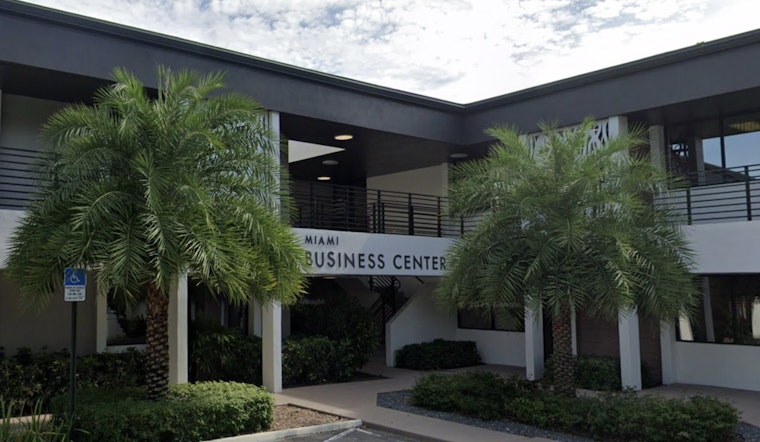
Anonymous mailboxes and virtual offices in Miami are suddenly starring in a very international drama. A cluster of Florida shell companies, all tied to low-key addresses in the city, has landed in the middle of a cross-border investigation into how the Argentine Football Association (AFA) handled hundreds of millions of dollars in overseas revenue.
At the heart of it all is a Florida firm called TourProdEnter, created in 2021, which investigators and reporting say pulled more than $260 million into U.S. bank accounts before large chunks were routed on to small Miami-registered LLCs. Local corporate filings and confidential banking records reviewed by reporters show multiple Florida companies sharing the same Miami address and corporate agent, a setup that investigators say makes it far tougher to identify who ultimately benefitted.
TourProdEnter and the U.S. money trail
TourProdEnter LLC was formed in 2021 and, within months, was named the AFA’s exclusive commercial agent for markets outside Argentina. Confidential bank records examined by reporters indicate the company took in more than $260 million between 2022 and 2025 across accounts at Bank of America, Synovus, Citibank and JPMorgan. That total is far higher than what appears in the AFA’s Argentine balance sheets, a gap that has drawn the attention of prosecutors and auditors, according to La Nación.
Miami addresses point to shell companies
Several Florida LLCs that received AFA-linked transfers list the same Miami registration address and share a single corporate agent, and some of those companies have been dissolved or show no visible business activity, as reported by the Miami Herald. The addresses in question are tied to virtual-office services, a common tool for quickly setting up companies in Florida that can also blur who actually controls them. Those Miami records, and the paperwork behind them, have become a central trail for Argentine investigators trying to match wire transfers to real-world beneficiaries.
Where the money went next
Reporting in Argentina says roughly $109.9 million moved from TourProdEnter to a securities agent based in Uruguay and then into investment vehicles in the British Virgin Islands, while at least $42 million was steered to small Florida firms with minimal operations. Investigative coverage identifies several of those recipients, including Soagu Services, Marmasch and Velp, and notes that some of the entities have no commercial footprint that lines up with the sums they received, according to Infobae.
Payments tied to insiders and luxury spending
Prosecutors have highlighted about $16.5 million in luxury spending linked to the accounts in question, and documents reviewed by reporters show outgoing payments that include transfers to relatives of a spiritual guide connected to the AFA, as well as payments to companies tied to the association’s inner circle. Records cited by reporters list a series of $20,000 payments and roughly $468,000 that investigators associate with firms connected to AFA treasurer Pablo Toviggino, details that are now folded into the broader probe, as reported by the Miami Herald.
Authorities are digging in
Argentine federal judges and prosecutors have opened criminal investigations and carried out raids on AFA offices and related properties as part of an inquiry into possible money laundering and disclosure violations, according to the AP. U.S. bank records produced during civil discovery show funds moving through Bank of America, Synovus, Citibank and JPMorgan, according to La Nación.
Why Miami matters
Florida’s easy company-registration process and the widespread use of virtual-office services make Miami a natural hub for entities handling cross-border money flows. In this case, local filings and corporate-agent listings have turned into core evidence for investigators trying to follow cash from international sponsors, streaming deals and friendly-match revenues back to the AFA, reporting shows, per Infobae.
The investigation in Argentina is still underway, and civil discovery in the United States has already widened the paper trail. Prosecutors in both countries could seek deeper cooperation as they work to identify who ultimately gained from the arrangements and whether any laws were violated. The AFA has rejected the allegations and defended its contract with the Miami firm, but the records now sitting in Miami files may become some of the most important pieces of evidence if the case moves forward.





