

























































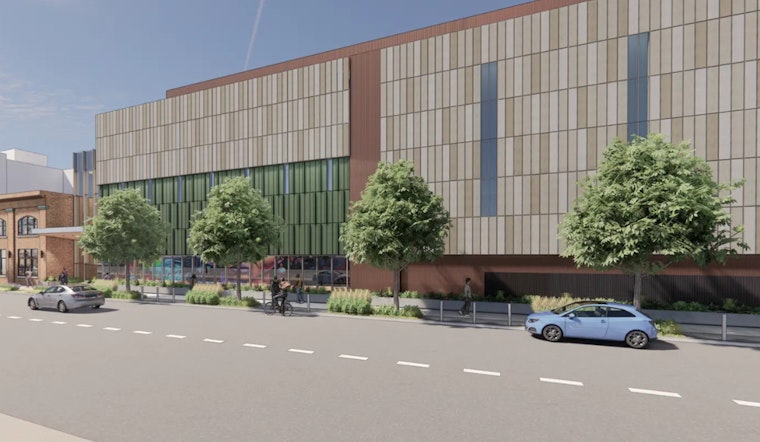
What was supposed to be a flashy esports arena in Chicago’s South Loop is quietly turning into something far more opaque: a two-story AI data center that slipped through the city process with barely a peep to the neighbors.
The project, branded as HydraVault, is billed as a purpose-built downtown data hub and has already started foundation work, according to company updates. The site advanced after the city signed off on a zoning "minor change," and developers and their PR team have so far dodged detailed questions about the facility’s cooling chemistry, energy sources, and community outreach plans. HydraVault’s own timeline pegs "early user access" for December 2026.
How the project moved forward
City planning records show the site’s use quietly shifted from a planned esports venue to an "Electronic Data Storage Center" through a minor amendment to Planned Development 1496. That finding meant there was no need for a public hearing.
According to the City of Chicago Department of Planning and Development, staff concluded the tweak "will not change the character of the development" and signed off on revised site plans and elevations that name HydraVault as the future occupant. That paperwork appears to have cleared the way for construction without the usual round of community meetings that often trails large industrial-style projects.
What HydraVault says it's building
On paper, HydraVault is pitching a roughly 76,000-square-foot, two-story data center, wired for up to 20 megawatts of supply power and rack densities reaching 200 kilowatts. The facility is marketed for heavy-duty AI model training and latency-sensitive financial workloads.
The developer’s website touts integrated liquid cooling and a closed-loop approach, and again circles December 2026 for early user access. A company release on PR Newswire leans hard on the project’s power and density targets. Local reporting and permit trackers show that a foundation permit has been issued and list Power Construction as the general contractor, per Urbanize Chicago.
Neighbors and experts uneasy
Some people living nearby say they first heard about the AI data center from other residents or from construction workers on site, not from any city-run forum.
University of Chicago computer scientist Andrew Chien told NBC Chicago that developers "need to build a constituency in the community" and cautioned that closed-loop systems can use "20% to 30%" more electricity because of the extra energy required to chill equipment. Residents of the adjacent Kissel Kar Lofts offered a mixed bag of reactions in comments to NBC Chicago, with some fretting about blocked views and pressure on utilities while others pointed to potential jobs and new investment.
Policy pressure and rising bills
While HydraVault takes shape, state and consumer advocates are trying to catch up with the broader data center boom.
Lawmakers and environmental groups have introduced the POWER Act, short for Protecting Our Water, Energy, and Ratepayers (SB4016/HB5513). The proposal would require data centers to report water use and would make them pay for needed grid and water system upgrades, according to the NRDC.
The Citizens Utility Board has warned that data-center-driven capacity costs could push the average Illinois electric bill up by roughly 70 dollars per month in the coming years, a projection the group links to recent wholesale power price spikes. At the same time, Governor J.B. Pritzker has proposed a two-year pause on new state tax incentives for data centers, a move outlined in his February 18 State of the State address and covered in trade outlets. Advocates say such a pause would give the state time to study grid and water impacts, according to Insurance Journal.
Who's behind HydraVault
Planning documents list Smash INTERACTIVE LLC as the applicant for PD 1496, and reporting has identified Scott Greenberg as the developer behind HydraVault. NBC Chicago notes that Greenberg previously pitched an esports arena for the same South Loop parcel and has contributed to local political campaigns.
His public relations team declined to answer NBC Chicago’s questions about the project’s cooling chemistry or its approach to community outreach.
What's next
HydraVault’s own construction updates show pile-driving work taking place late last year at 2538 S. Wabash, and the company continues to advertise a December 2026 early-access date on its website.
With foundation work already underway, the South Loop project is shaping up as a test case for whether new state policies or the POWER Act will force more transparency around water use, energy sourcing, and neighborhood protections for urban data centers. For people living closest to the site, the more immediate concern is simpler: whether city officials and developers will provide enough detail to calm fears about higher utility bills, water strain, and day-to-day impacts on the block.





