

























































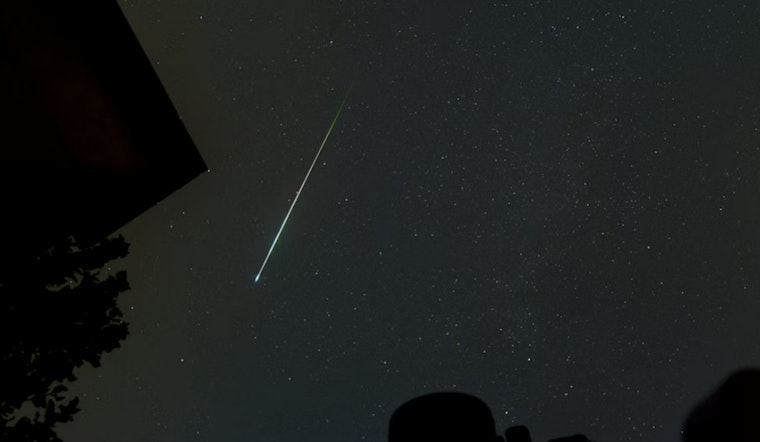
Early Monday morning, a brilliant green fireball tore across the Pacific Northwest sky, briefly turning pre-dawn darkness into a neon spectacle from the Portland metro area to parts of southwest Washington. The streak lasted only a few seconds, but that was long enough for startled early risers to grab their phones and start recording, then flood social feeds with clips and questions.
According to FOX 12, the Oregon Museum of Science and Industry said the meteor was spotted at about 6:06 a.m. The museum noted that the striking green color often shows up when magnesium in the object vaporizes as it heats during its plunge through the atmosphere. FOX 12 reported sightings from Boring, southeast Portland, Kalama and Eugene, and invited viewers to send in photos and video through its submit-photos page and app.
Where Reports Came From And Why They Matter
Within minutes, videos and eyewitness accounts were popping up across social media feeds and neighborhood groups. Those casual posts are more than just bragging rights. Scientists use crowdsourced reports to triangulate a meteor’s path across the sky. The American Meteor Society keeps a public fireball log where people can share the time, location and any footage they captured, which helps researchers figure out whether an event was caused by a natural meteoroid, a piece of rocket debris or something less common.
What Experts Say It Probably Was
Events like this are typically classified as fireballs or bolides, which are very bright meteors that burn up high in the atmosphere. Government sensors and scientific programs track and catalog these flashes to better understand what is entering Earth’s skies and how energetic the events are. NASA/JPL CNEOS publishes archived data and light curves for similar incidents and outlines how agencies measure brightness, altitude and energy to study incoming space rocks and their potential risks.
How To Help Scientists
If you caught the green streak on camera, scientists would love to borrow your evidence. Make note of the exact time and your location, then upload the video to the American Meteor Society’s reporting page or share it with local news outlets. High-quality, timestamped footage from different angles lets researchers reconstruct a more precise trajectory. The American Meteor Society encourages people to submit clips and detailed reports so experts can follow up on events like Monday’s light show.



