

























































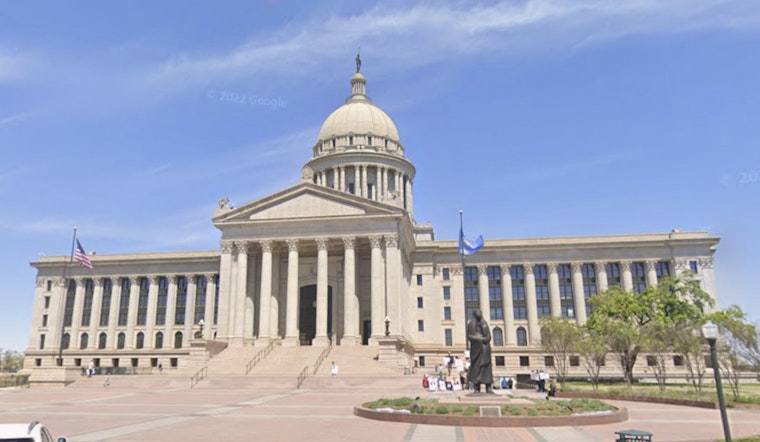
The Oklahoma House has signed off on a highly ambitious tech play, advancing House Bill 3176 on a 51-37 vote to set up a state-run research office that would stitch together oil and gas, artificial intelligence and space technology. The proposed Oklahoma Gas, Artificial Intelligence and Space Research Hub, or GAS Hub, would live inside the Department of Commerce, chase federal lab designations and lock in long-term research partnerships. The bill now heads to the Senate for its turn in committee.
What the GAS Hub Would Do
According to the bill text, the GAS Hub would become Oklahoma’s central coordinating arm for recruiting, developing and hosting a U.S. national laboratory. It would be tasked with working across state agencies, universities and private industry to identify and prep “federal-ready” sites and to build out matching workforce pipelines.
The office would be allowed to enter public-private partnerships to develop research parks, laboratory campuses, high-performance computing facilities and even spaceport infrastructure. It would also be required to file an annual report to the governor and legislative leaders, as outlined by the Oklahoma Legislature.
Supporters' Pitch
Rep. Nick Archer, R-Elk City, told colleagues he started pushing the idea after a visit to the Pacific Northwest National Laboratory, pitching the GAS Hub as Oklahoma’s ticket into the big leagues of federal research money. He argued that federal energy research and development has leaned heavily toward nuclear and renewables while oil and gas have been left on the sidelines.
Archer said the hub could be a long game for building talent pipelines, attracting high-skilled workers and convincing homegrown experts to stay in state instead of decamping for coastal labs, as reported by KOSU.
Price Tag and Staffing
A House fiscal analysis pegs the annual cost at about $831,547. Most of that would come from four new positions inside the Department of Commerce, totaling roughly $539,608, plus about $291,938 in operating expenses.
The fiscal review notes that Commerce would need new appropriated dollars to pay for the office rather than shuffling existing funds, according to the Oklahoma House fiscal Oklahoma Legislature.
Why Timing Matters
The push is not happening in a vacuum. The bill’s timeline lines up with a U.S. Department of Energy Request for Information seeking “Nuclear Lifecycle Innovation Campuses” that could handle fuel fabrication, enrichment, reprocessing and disposition. The Department of Energy asked for responses by April 1, 2026.
Supporters say getting organized now could help Oklahoma show up as a serious contender for those federal opportunities. Skeptics counter that launching a fresh research shop in the middle of a tight budget cycle is a high-wire act, as described by the Department of Energy.
Next Steps and Pushback
Despite the concerns, the House moved the measure forward on a 51-37 vote, and Sen. Dave Rader, R-Tulsa, will carry it in the Senate. On the floor, Democrats including Rep. Arturo Alonso-Sandoval and Rep. Aletia Timmons pressed Archer on why the proposal leans so hard into natural gas.
They also pointed to the state’s roughly $1.5 billion shortfall and $12.1 billion in certified available appropriations as reasons to slow down before writing checks for a brand-new initiative, according to KOSU.
Backers say that if the GAS Hub can pull in federal backing and private partners, it could eventually funnel long-term research dollars and high-paying jobs into Oklahoma. For now, lawmakers have to decide whether that promise is worth the upfront hit as HB 3176 begins its climb through the Senate.





