

























































The woman in the bright bird costume who became a viral flashpoint outside Portland’s Immigration and Customs Enforcement building is walking away a free woman.
On Wednesday, a Portland jury acquitted 47-year-old Angella Lynn Davis of all counts after a three-day trial over a chaotic October confrontation outside the ICE facility. Davis had been charged with second-degree disorderly conduct and offensive physical contact. Jurors spent the week sorting through clashing video clips and sharply different witness accounts from the long-running protest site near the building.
Senior Deputy District Attorney Kevin Demer told jurors that prosecutors believed Davis grabbed a stick and joined a group that closed in on conservative influencer Nick Sortor. In video shown in court, a woman in a feathered outfit can be seen moving with the crowd as Sortor tumbles to the pavement. As reported by Tampa Free Press, the defense countered that Sortor had come to Portland to stir up demonstrators, arguing jurors could not honestly say the state had proved its case beyond a reasonable doubt.
Video, court filings and the bird costume
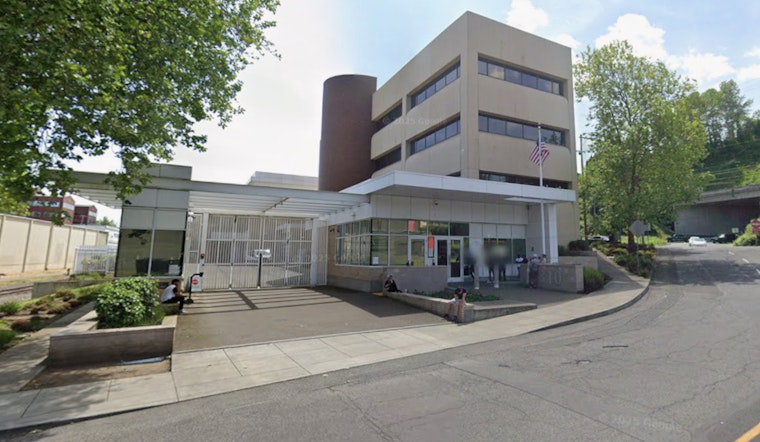
Court filings paint a messy scene on the street: Sortor moving through a tight crowd, protesters shoving back as he films, and a bird-costumed figure reportedly chasing him while swinging a stick. As reported by KATU, probable-cause documents and witness statements place much of the action on South Moody Avenue near the ICE building.
National outlets also jumped on the story. Coverage noted that Sortor stepped in when an American flag was lit on fire, using a fire extinguisher to douse the flames, a move that clearly escalated tempers in the crowd. The Washington Post reviewed video showing Sortor telling viewers he felt “way outnumbered.”
Defense cast Sortor as a provocateur
Davis’ attorneys leaned hard into Sortor’s public persona, highlighting footage of him at protests in other cities in an effort to undercut his credibility. They urged jurors to see his presence in Portland not as that of an innocent victim, but as a provocateur wading into a volatile scene with cameras rolling.
That framing, they argued, made reasonable doubt not just possible but likely. The panel took in three days of testimony and video before returning the not-guilty verdict, according to Tampa Free Press.
Other charges and civil claims
Police arrested three people the night of the October clash, and prosecutors chose to move forward against two of them while declining to charge Sortor criminally. As reported by OPB, Sortor later filed a tort claim that signaled his intent to sue the City of Portland over his arrest, even as prosecutors maintained the evidence did not support charging him.
That dispute has unfolded alongside broader litigation and federal scrutiny focused on how authorities have handled protests at the ICE site, turning a single chaotic night into part of a much larger legal saga.
Why this still matters
The nightly protests outside the ICE building are about more than homemade signs and chants. Participants on all sides routinely film and live-stream confrontations, which are then quickly repackaged into competing political narratives. In legal filings, the Portland ICE facility is listed as 4310 S. Macadam Avenue, right by Southwest Moody Avenue, a stretch that has become a familiar backdrop for these clashes.
Court documents detail ongoing battles over crowd-control tactics and the use of force at that location, a reminder that what plays out on the sidewalk often ends up under a federal judge’s microscope.
Legal implications
The acquittal means jurors decided the state had not proved that Davis was guilty beyond a reasonable doubt. It does not, however, shut the door on civil claims or internal reviews tied to the same night.
Sortor’s planned tort claim will likely send much of the same video evidence into a different legal arena, one where the standard of proof is lower and the focus could shift to whether police and city officials followed the Constitution and their own policies. OPB has followed how these overlapping cases and investigations are helping shape Portland’s protest policies and federal oversight.
Outside the courthouse, reactions were quick and loud. Supporters on both sides seized on the verdict to argue over who gets to film protests, how far is too far when it comes to live-streamed activism, and what kind of response police should bring to a scene already humming with cameras. The not-guilty verdict closes this particular criminal case, but in a city where protests and online video collide on a near-nightly basis, it is unlikely to be the final legal or political word.





