

























































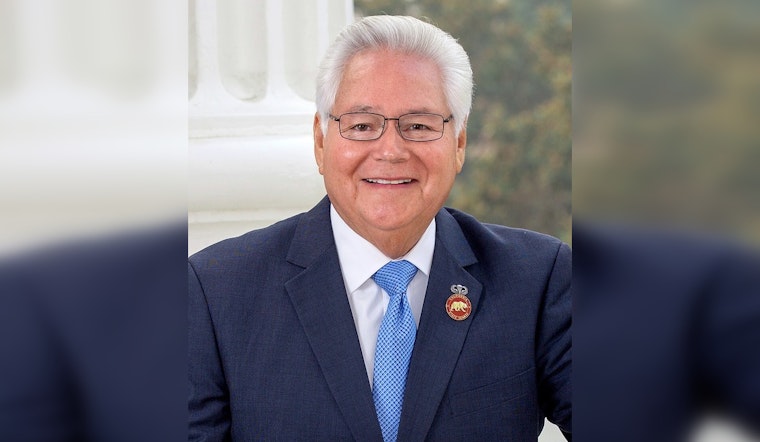
Sen. Bob Archuleta is trying to drop California’s tax bill for retired service members, filing Senate Bill 1407 this month to fully exempt military retirement pay and Survivor Benefit Plan annuities from state income tax. The proposal would wipe out the existing $20,000 cap that lawmakers approved last year. Backers say that would make California more competitive for veterans and keep federal retirement dollars circulating in local neighborhoods, while critics are expected to press hard on what it could mean for the state budget. The bill now starts the usual committee gauntlet in Sacramento.
Who filed the bill and who backs it
SB 1407 was formally introduced in late February and lists Assemblymember Pilar Schiavo and Sen. Steven Choi as co‑authors. The filing also names Treasurer Fiona Ma and the San Diego Military Advisory Council among its sponsors. As reported by the Orange County Register, the measure quickly landed on the radar of veterans groups and lawmakers in both parties.
What SB 1407 would change
The bill would amend the state’s Personal Income Tax Law so that military retirement pay and survivor annuities are excluded from personal gross income, making them entirely non‑taxable at the state level and removing the current $20,000 annual cap. The bill text and Legislative Counsel summary describe an immediate change to how taxable income is defined that would take effect once the measure is enacted. As detailed by LegiScan, SB 1407 targets portions of the Revenue and Taxation Code that now allow only a partial exclusion.
How it builds on a recent tax break
Lawmakers and the governor approved a partial break last year, creating a time‑limited exclusion that lets qualifying taxpayers subtract up to $20,000 of military retired pay or survivor benefits from California taxable income. The governor’s office highlighted that move in a Feb. 10 press release, and the Franchise Tax Board has posted guidance explaining the adjusted gross income thresholds and the temporary window for that $20,000 exclusion. The latest proposal would expand that step into a full exemption.
Why sponsors say it matters
Archuleta argues that the partial exclusion did not go far enough and that California has been steadily losing retired service members, a trend he links to the state’s tax treatment. His office cites data showing the state lost more than 24,000 military retirees between 2010 and 2022, and estimates that the outflow costs California roughly $700 million a year in federal retirement dollars that could otherwise flow through local economies. “Those who have served our nation deserve a state that serves them in return,” Archuleta said in a statement, which frames the bill as a recruitment and retention tool for critical technical and leadership skills. The full statement and supporting figures are laid out in a press release from Sen. Bob Archuleta's office.
Bipartisan push and who supports it
Co‑authors and supporters are pitching SB 1407 as a bipartisan fix to what they describe as an affordability problem for veterans who want to stay in California. Assemblymember Pilar Schiavo, who co‑authored the bill, has called last year’s partial exclusion an important first step and urged colleagues to “finish the work” by making the tax break complete. Veterans groups, including the San Diego Military Advisory Council, have publicly backed the effort as a way to keep skilled retirees rooted in California communities. Schiavo’s remarks are detailed in a statement from Assemblymember Pilar Schiavo's office.
Where the bill stands
For now, SB 1407 has been introduced and is awaiting its first stop in the committee process. As of its filing, the measure was listed as introduced and set to be printed, then sent to a policy committee for assignment. The bill text and procedural history are being tracked on LegiScan.
Budget questions and the bigger picture
As with any new tax break, the fiscal debate is already baked in. The temporary $20,000 exclusion approved in the budget was estimated by some proponents to cost roughly $130 million in the first year and about $80 million annually after that. A full exemption would almost certainly increase that price tag, although supporters argue that keeping more retirees in California would strengthen local economies through their spending and second‑career earnings. For the earlier estimates and background on the 2025 exclusion, see Assembly materials from Assemblymember Jasmeet Bains' office.
SB 1407 now joins a broader push this session to ease costs for military families as California competes with other states that already exempt most or all military retirement pay. Lawmakers on both sides of the aisle say they will be watching committee analyses and the overall budget picture closely before deciding how far they are willing to go.





