

























































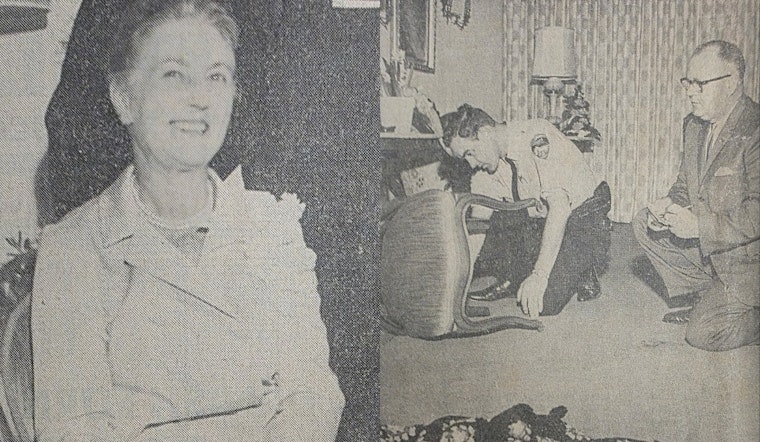
Nearly six decades after the killing of Marjorie Rudolph, San Rafael police say modern DNA testing has finally pointed to a suspect. Investigators have identified Laurel James Switzer as the likely person connected to the Feb. 1, 1966 homicide, saying DNA from preserved evidence places him at the scene. According to the department, Switzer died by suicide eight days later on Feb. 9, 1966.
In a post on X from the San Rafael Police Department, officials said the break came after they reexamined evidence saved from the original investigation. Detectives reported that cigarettes found at the 1966 crime scene were tested, and DNA from those items was matched to reference samples voluntarily provided by surviving relatives of Switzer.
SUSPECT CONNECTED TO CRIME SCENE IN 60-YEAR-OLD HOMICIDE CASE THROUGH ADVANCED DNA ANALYSIS:
— San Rafael Police Department (@SanRafaelPolice) March 31, 2026
San Rafael, CA – The San Rafael Police Department (SRPD) has positively linked a previously identified suspect to the 1966 homicide of Marjorie Rudolph using advanced DNA analysis.… pic.twitter.com/60WWSQ4VL7
How DNA Finally Moved A 1966 Case Forward
Othram, a Texas-based forensic laboratory, extracted DNA from the decades-old material and used forensic-grade genome sequencing to develop a detailed profile suitable for genealogical research. Its in-house forensic genetic genealogy team generated new investigative leads, which were then passed along to San Rafael detectives, according to Othram.
What Investigators Did After The DNA Hit
San Rafael detectives, working alongside retired investigators Harry Barbier and Kevin MacDougald and with assistance from the Sacramento County District Attorney’s Office, obtained family reference samples from relatives who consented to testing, the department said. Those samples confirmed a match to the cigarette evidence from the crime scene. That match is the basis for officials now considering Switzer, who had already been named a suspect in the original 1966 investigation, as the likely person at the scene.
Who Picked Up The Lab Tab
According to the department, the DNA work was paid for with a grant from Season of Justice, a nonprofit that funds advanced DNA testing and public-awareness campaigns for cold cases. The organization’s website notes that it has supported hundreds of investigations by underwriting next-generation sequencing and genealogical research.
DNA Tech Is Reshaping Old Files In Marin And Beyond
The San Rafael development arrives amid a series of Northern California cold-case breakthroughs that have leaned on the same kind of advanced DNA and genealogy tools. The San Francisco Chronicle reported last year that Othram helped identify a 1966 Marin County Jane Doe after modern sequencing and genealogical work. Investigators and victims’ advocates say this technology is transforming what used to be dead-end files in many departments.
Veteran Investigators Stayed On The Case
Retired San Rafael police investigators and members of the original team have remained involved in reviewing the case, and department materials highlight years of meticulous evidence preservation that made today’s testing possible. Barbier has chronicled local investigations in his "Behind the Badge" columns, emphasizing how long-term stewardship of case files can pay off once new tools arrive; his work is collected at Behind the Badge.
What Comes Next For The Rudolph Case
San Rafael detectives say they will keep reviewing the Rudolph file and will continue to share developments with the victim’s family and with partner agencies. Anyone who has information related to the case is asked to call the San Rafael Police Department non‑emergency line at 415‑485‑3000.




