

























































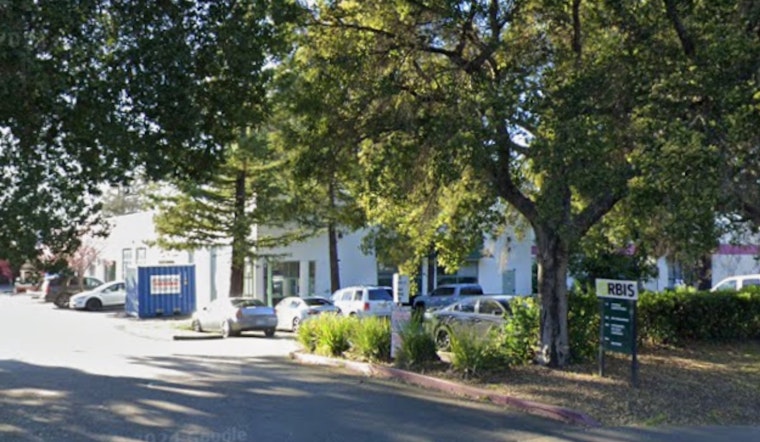
Santa Rosa motor-maker Orbis Electric is pitching a homegrown fix for one of tech's nastiest problems: cooling the massive server farms behind generative AI. The company says its HaloDrive-powered Cooling Engine can shrink the floor space eaten up by cooling gear and claw back power that conventional systems waste, and it wants the manufacturing to stay in Sonoma County.
Founder Marcus Hays told The Press Democrat that Orbis currently operates in about 14,000 square feet in Santa Rosa and expects to need 40,000 to 45,000 square feet by 2027 as it scales. Hays and other executives said they see the workforce growing toward roughly 300 employees and project more than $500 million in annual revenue by 2028 as the business ramps. The company also told the paper that a first demonstration unit could be ready by March 31 and that it is closing a Series A funding round. Orbis plans to keep engineering in house while shifting high volume assembly to contract manufacturers in order to preserve local design jobs, according to the company.
HaloDrive And The Cooling Engine
The Cooling Engine centers on an axial flux HaloDrive motor paired with integrated pumps that can both move fluid and recover energy from the flow, similar to regenerative systems in electric vehicles that turn braking into electricity. As outlined by Business Wire, the module is designed to trim chiller and pump energy, cut the mechanical footprint of traditional coolant distribution units roughly in half, and support higher rack densities in AI data halls. The company says on its own site that the platform is fluid agnostic and built to handle rack densities above 200 kW, a class of workloads that hyperscalers and AI clusters are rapidly demanding, with more detail available on Orbis Electric product pages.
Why The Timing Matters
The market is enormous and crowded. JLL forecasts nearly 100 gigawatts of new data center energy demand by 2030 in its 2026 Global Data Center Outlook and estimates the broader buildout could require as much as $3 trillion in investment. At the same time, Sightline Climate warns that many announced projects show little visible construction and that only about 5 GW is actually under construction, creating grid and permitting bottlenecks. Those constraints make energy saving cooling technology especially appealing and are pushing operators to look hard at systems that reduce both power draw and the need for new grid connections.
Cooling Eats Power And Attention
Cooling is one of the biggest non IT power drains inside a data center. The International Energy Agency reports that cooling's share of total energy use can be as low as roughly 7% in very efficient hyperscale facilities and more than 30% in less efficient enterprise sites, while the National Renewable Energy Laboratory has highlighted examples where cooling soaks up as much as 40% of a center's total load. That arithmetic is why better coolant distribution, more effective heat recovery, and smaller mechanical footprints are now central to infrastructure planning for AI workloads, since even modest percentage gains can free up megawatts of capacity across a campus.
Local Bets And Supply Chain Moves
Sonoma County's manufacturing base gives Orbis a bit of a home field advantage. County economic development reports and industry briefs indicate the region has roughly 23% more manufacturing jobs than the national average for similarly sized areas, along with a rising manufacturing gross regional product. That makes Santa Rosa a logical place to keep engineering and higher paying production roles rooted.
The company has also stressed avoiding rare earth supply chain risk by turning to ferrite based or other rare earth free magnet designs, a direction that national labs are also pursuing. Ames National Laboratory, for example, has published work on non rare earth MnBi magnets that industry partners are testing. Orbis says it has already piloted HaloDrive hardware with partners and suppliers and is lining up manufacturing partners to shift from demonstration units to volume production, a playbook that keeps higher value engineering work in Sonoma County while exporting large scale assembly to contract manufacturers.
"I think we can stay in Santa Rosa. I do not think we have to leave," Hays told The Press Democrat, casting the effort as both a business move and a local jobs bet. Whether Orbis can turn a pilot system into a full manufacturing ramp will hinge on customer trials and capital, but if those pilots hit their marks, the company could become a case study in a Bay Area firm trying to grab a slice of the AI infrastructure boom without bolting from Sonoma County.





