

























































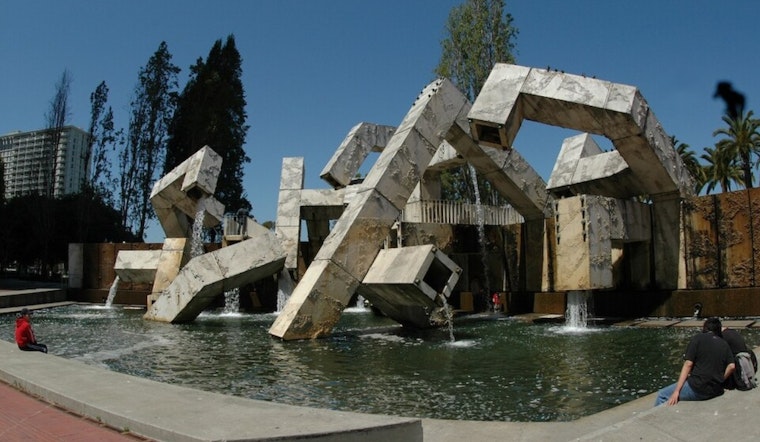
A San Francisco judge has thrown a temporary lifeline to the Vaillancourt Fountain at Embarcadero Plaza, halting the city’s plan to take the concrete sculpture apart and cart it off to storage. For now, the fenced-off, half-century-old fountain stays put while a legal fight over emergency powers and environmental rules plays out in court.
The preservationist group Friends of the Plaza filed suit on Feb. 12 and is seeking a preliminary injunction that will be heard April 6 by Superior Court Judge Jeffrey Ross, according to reporting by the San Francisco Chronicle. A case management conference is set for March 16, and the city attorney has agreed with the petitioners that no one will cut, move or dismantle the fountain until the court rules on the injunction. At issue is whether the city properly used an emergency exemption from the California Environmental Quality Act, or CEQA.
What the lawsuit argues
The lawsuit, brought under CEQA and mandate theories, claims the city manufactured an emergency to dodge legally required environmental review and public input, according to a press release from The Cultural Landscape Foundation. The filing bluntly states that there are, in fact, no circumstances relating to the condition of the fountain that qualify as an emergency and cites internal emails that plaintiffs say show city staff talking about removal well before any official emergency finding. The coalition, which includes the Vaillancourt family, Docomomo and several other preservation groups, is asking the court to keep the fountain intact while alternatives and environmental impacts are fully reviewed.
City officials cite safety concerns and costs
City officials tell a very different story. Recreation and Park Department staff and independent engineers testified to the Board of Supervisors that the fountain’s hollow steel liners and cantilevered arms are corroding and deteriorating and that fencing has not reliably kept people off the structure. The department estimates roughly $4 million to disassemble the work and put it into storage and has budgeted about $32.5 million for a full Embarcadero Plaza redesign that does not include the fountain, according to public records and prior reporting. The Arts Commission owns the artwork and Rec & Park manages the site; officials say that moving the piece off-site would let engineers safely perform a deeper assessment of whether it can be restored or relocated.
CEQA and the emergency exemption fight
The legal clash centers on CEQA’s emergency exemption, a narrow carve-out that allows immediate action when a genuine, imminent threat to public safety exists under state guidelines. Justia notes that California’s CEQA rules limit these exemptions to true crises. Preservationists argue that the city’s own records show officials were already talking about removal well before declaring any emergency, a point Docomomo raised in its appeal and public comments. The court’s ruling could decide whether the city must complete a full environmental review before it can alter the plaza.
Next steps and what to watch
Judge Ross is scheduled to hear the preliminary injunction motion on April 6 at the Civic Center courthouse, with a case management conference set for March 16, according to the San Francisco Chronicle. If the court grants the injunction, the city’s plan to disassemble and store the fountain, which officials had projected could begin earlier in the year, will be on hold while a fuller CEQA challenge moves forward. If the judge denies the request, additional legal fights over environmental review could still slow any physical removal.
Why the fight matters
This battle is about more than one chunk of concrete. The 1971 Vaillancourt Fountain has served as a backdrop for protests, a playground for generations of skaters and an anchor of public life along the waterfront. Its removal would reshape whatever new version of Embarcadero Plaza emerges, observers say. Coverage of the debate has highlighted the tension between preserving mid-century public art and confronting documented structural problems and long-term maintenance costs, as noted by SFGATE. Preservation advocates warn that “temporary” storage can become a slow path to permanent loss, while city officials continue to stress public safety and budget realities.
For now, the fountain’s future will be decided in a courtroom instead of on a construction schedule. Preservationists are pushing for a transparent review and serious restoration study. City officials are pressing for a plaza overhaul they argue must prioritize safety and everyday usability. The April hearing could decide whether the fountain starts coming down next year or remains at the center of a very San Francisco civic fight for months to come.





.jpg)