

























































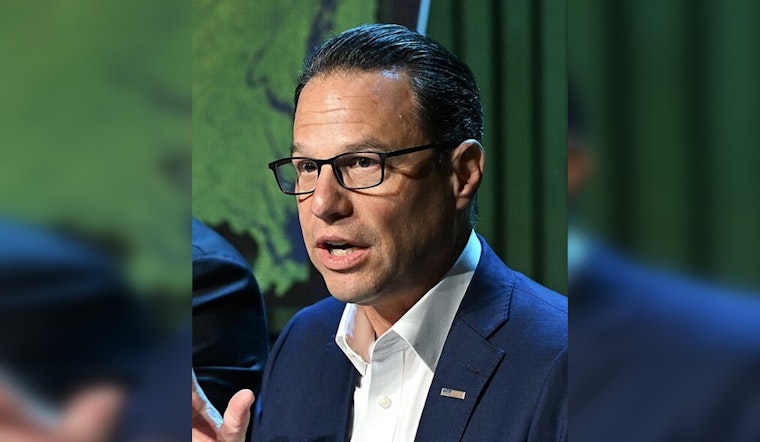
Gov. Josh Shapiro is sitting on a comfortable early lead over likely Republican challenger Stacy Garrity in Pennsylvania’s 2026 governor’s race, according to a batch of new statewide polls. The numbers put Democrats in the driver’s seat for what is expected to be one of the marquee contests of the fall and hint that the real battle may be fought in fundraising totals, turnout operations and the persuadable pockets of suburban and industrial counties across the commonwealth, as per Franklin & Marshall College.
Polling snapshot
In a March survey from Franklin & Marshall College, Shapiro leads Garrity 48% to 28% among registered voters and holds a job-approval rating of about 50%. The poll, conducted Feb. 18 through March 1, also found more Pennsylvanians saying the state is on the wrong track than on the right one, a mood that could matter if economic worries get louder between now and November.
Quinnipiac University painted an even rosier picture for the incumbent. Its Feb. 25 survey showed Shapiro ahead 55% to 37% among registered voters. Quinnipiac also underscored a basic problem for Garrity this far out from Election Day: a sizable share of respondents said they have not heard enough about her to form an opinion, a visibility gap Republicans will be under pressure to close.
How the polls compare
The polling average tells broadly the same story with a little less drama. According to 270toWin, recent qualifying surveys put Shapiro in the low 50s and Garrity in the low 30s once the results are smoothed together. Differences from poll to poll largely come down to basics like whether the sample is registered voters or likely voters, precisely how questions are worded and when in the calendar the calls were made. Campaigns treat these early numbers as a compass, not a crystal ball.
Money and momentum
If the horse race numbers give Shapiro an edge, the money race turns it into a full-on head start. Spotlight PA reports that Shapiro outraised Garrity by more than 15 to 1 in 2025 and began this year with roughly $30 million in the bank. That kind of cash pile gives Democrats freedom to reserve pricey ad time early and build out turnout operations.
Garrity, who formally jumped into the race in August 2025 with the backing of the state Republican Party, faces a very different assignment. She needs to close both the fundraising gap and the name-recognition gap at speed, a dynamic Axios highlighted when she launched her bid.
What to watch next
The calendar will start doing some of the work for both campaigns soon enough. Pennsylvania’s primary is set for May 19, 2026, according to the Pennsylvania Department of State, giving party activists and donors a clear deadline for settling any internal disputes.
The broader political environment still looms over everything. Pennsylvania has been a presidential battleground in recent cycles, and the Associated Press called the state for Donald Trump in 2024. That recent history suggests national winds and turnout patterns could again spill over into the governor’s race.
Over the coming months, three storylines will be worth watching closely: whether Republicans consolidate their money and messaging around Garrity without major internal drama, whether Shapiro’s financial advantage turns into an effective ground game in Philadelphia and the surrounding suburbs and whether shifting economic sentiment pulls the numbers tighter. For now, the early polling breaks Shapiro’s way, but there is plenty of campaign season left for both sides to try to move the scoreboard.





