

























































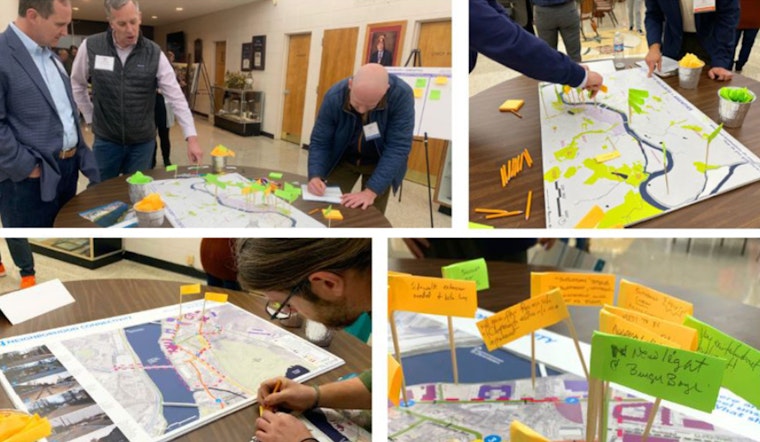
The Knoxville City Council has thrown its support behind the South Waterfront Downriver Master Plan, a community-built roadmap for reshaping the south bank of the Tennessee River. The endorsement inches a multi-year planning effort closer to reality by setting priorities for everything from a longer Riverwalk to mixed housing and riverfront green space, and by giving neighborhoods clearer rules before developers roll in with proposals. Supporters hailed the city-led blueprint as a way to coordinate investment and protect public access, while one councilmember urged the city not to get ahead of itself.
The council voted to adopt the master plan and use it as the foundation for upcoming requests for proposals. Councilmember Amelia Parker abstained and cited the University of Tennessee’s past use of eminent domain, calling herself "one voice, one vote of caution," as reported by WVLT.
How the plan was built
City staff and a handful of residents began meeting in January 2023 to review the South Waterfront form-based code and identify where it needed updates. That small working group eventually evolved into the South Waterfront Advisory and Advocacy Group (SWAAG), which pulled in more neighborhood voices. According to the City of Knoxville, the project website now hosts the final report and an Implementation Strategy that lays out what was heard at workshops, what design work was done, and how projects are sequenced over time. The process was built to turn community priorities into specific project phases rather than leaving the area to one-off, piecemeal development.
What the plan would build
The master plan’s headline items include a Riverwalk extension, new mixed housing, clusters of retail and entertainment, public greenways and a pedestrian and bike bridge that would make it easier to cross the Tennessee River without a car. The vision also points to a potential wetland park at the confluence of Goose Creek and the river, along with stronger commercial corridors in nearby neighborhoods. Residents involved in the process noted that much of the downriver land is now in the hands of the Knoxville Community Development Corporation, a shift they say could help head off speculative, quick-flip development, according to WVLT.
Next steps and funding
With council backing, city staff say the Implementation Strategy will guide which projects move first, how requests for proposals are written and what grants the city pursues. The City of Knoxville notes that the Connectivity Study’s Implementation Strategy and the final report PDFs will be used to prepare RFPs and chase funding for top priorities such as the proposed pedestrian bridge. Planning staff have indicated that design work on key Riverwalk connections is already underway, and the master plan will shape how those pieces are bundled and bid out.
Local reaction and legal questions
Neighborhood advocates praised a process they said kept public access, transit connections, and housing affordability in the foreground. Critics and some longtime residents remain wary about displacement and how land could be acquired if the plan moves into heavy construction. Parker’s abstention underscored those concerns: she pointed back to earlier university expansions that relied on eminent domain and called for continued community oversight as the city starts writing and issuing proposals. City staff and neighborhood leaders say there will be more public meetings and that the formal RFP process itself will be another venue to tighten protections and spell out any acquisition strategies.
For now, the endorsement sets the overall policy direction and gives planners a sharper set of tools to pursue design work, funding, and developer selection in the coming months. Residents can dig into the final report and Implementation Strategy on the city’s project pages as Knoxville maps out what comes next along the downriver waterfront.





