

























































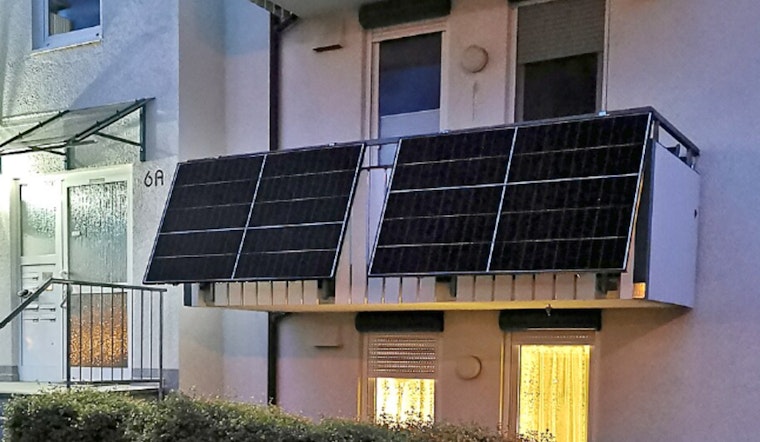
Illinois lawmakers are pushing a first-of-its-kind tweak to state solar rules that could turn Chicago’s balconies, porches, and back decks into tiny power plants. A new bill would let apartment and condo residents plug small "balcony" solar kits straight into a standard household outlet, easing a tangle of rules that has kept most renters out of the rooftop solar game.
The proposal keeps safety front and center, setting limits and conditions for lightweight plug-in systems while hanging on to existing protections around how customer-owned solar connects to the grid and how it gets compensated.
What the bill does
Senate Bill 3104, filed by Sen. Rachel Ventura, formally defines "plug-in solar energy systems" and blocks electricity providers from forcing customers to get pre-approval, pay extra installation fees, or add special controls just to use those kits, according to the Illinois General Assembly. The bill still requires that equipment comply with the National Electrical Code and carry UL or equivalent certification, and it spells out that systems that do not interconnect in the standard way will not qualify for net-metering credits or for distributed-generation rebates.
Committee vote and sponsors
The measure cleared the Senate Energy and Public Utilities Committee in mid-March and now heads to the full Senate, according to WJOL. Ventura and other supporters say the policy is aimed squarely at renters and condo owners who have been fenced out of traditional rooftop systems. Lawmakers in the House have introduced companion language so the idea can move in tandem through both chambers.
Why is it moving now
The timing is not an accident. Momentum picked up after UL Solutions rolled out a testing and certification framework based on UL 3700 in January, giving regulators and manufacturers a clear safety benchmark for plug-in kits, according to UL Solutions. Industry outlets and policy watchers say that the standard has already helped spark a wave of state proposals to legalize “balcony” or plug-in solar in 2026, a trend detailed by pv magazine USA.
What it would mean for Chicago renters
These kits are designed to stay modest in size and portable enough for renters. Many policy proposals cap how much power they can send out at well under a kilowatt, and a typical 800-watt setup can trim an apartment’s power bill while costing from a few hundred dollars to a couple thousand, according to Solar.com. Supporters argue that SB 3104 could make renewable energy meaningfully more accessible for city residents who have no shot at a full rooftop array.
On the other side of the ledger, building managers and utilities are expected to keep pressing for clarity on wiring rules, insurance questions, and broader building safety, particularly in dense neighborhoods where balconies, decks, and fire escapes already compete for space.
Voices and next steps
“Clean energy shouldn’t be a privilege reserved for people who own a single-family home with a rooftop,” Representative Laura Faver Dias told the Chicago Tribune. The bill still includes several technical guardrails, including a narrow protection for very small systems from certain HOA or lease restrictions and a specific statement that non-interconnected systems will not receive net-metering.
As SB 3104 heads toward a floor vote, legislators will be haggling over those details, while renters across Chicago quietly do the math on how much sun their balcony really gets.




