

























































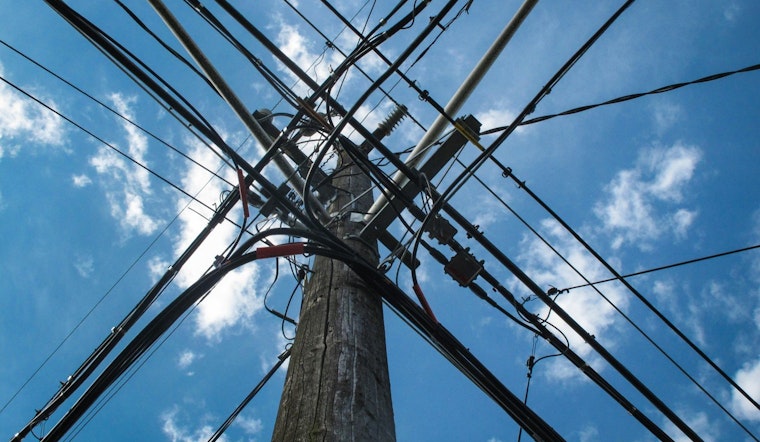
Nashville Electric Service is floating a pilot program to move overhead utility lines underground in four neighborhoods, but the idea is already running into some very real-world obstacles. The pitch is all about resilience and reliability, yet Middle Tennessee’s geology, the tangle of other utilities on the same poles, and a hefty construction price tag make the effort anything but simple. NES says it will start with a feasibility study before deciding which neighborhoods get picked for the pilot.
According to WSMV, NES has not identified the four pilot neighborhoods, and former Glasgow Electric Plant Board CEO Billy Ray is blunt about how tricky this could get. “Trying to go backwards and get that out of an existing neighborhood is fraught with problems,” Ray told WSMV, adding that crews could run into “a lot of rock” that might require “open cutting, perhaps even some dynamite.” WSMV also reported Ray’s rough estimate that individual homeowners could face about $1,000 each to reconfigure their service, while a systemwide conversion could run into the billions.
Geology complicates digging
Middle Tennessee sits on the Nashville Basin’s carbonate bedrock, where limestone and dolomite create karst terrain with caves, sinkholes, and shallow rock that make long, continuous trenches both expensive and unpredictable. The U.S. Geological Survey notes that carbonate bedrock in the Nashville Basin often lies close to the surface, a condition that can force contractors into rock excavation or blasting and drive up project costs and schedule risk.
Costs add up fast
Industry and regulator studies have found that converting existing overhead distribution lines to underground is typically many times more expensive than building new overhead lines. Urban conversions often range from the low hundreds of thousands to multiple millions of dollars per mile, depending on terrain, ductwork, and the number of service connections along the route. Utilities and regulators cite average conversion costs in the mid-millions per circuit mile for many urban projects, a reality that can push a broad undergrounding program into multi-billion dollar territory. Edison Electric Institute
What comes next for neighborhoods
NES told reporters it will begin with a formal feasibility study and will have to coordinate with other utilities that share its poles before any poles can come down, according to WSMV. Past state reviews have warned that how a project is paid for matters a lot: large conversion efforts are usually funded by ratepayers, taxes, or direct assessments, which is one reason many communities choose targeted undergrounding instead of moving entire systems at once. Virginia State Corporation Commission
All of that history points to a likely scenario for Nashville: a focused pilot or corridor strategy instead of tearing up whole neighborhoods in one go. Residents will want to keep an eye on NES public meetings and the upcoming feasibility study, where officials are expected to spell out timelines, likely pilot locations, and any potential costs that could land on homeowners’ bills.





