

























































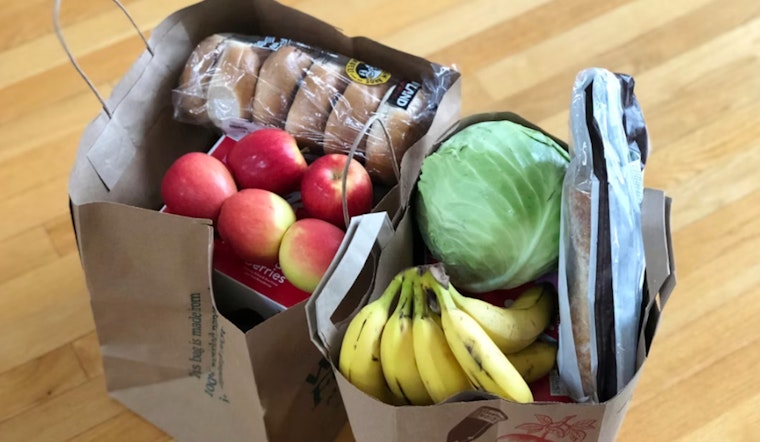
A quiet patch of land on Vancouver’s east side has turned into an emergency supply line for Latino families who are now too nervous to run basic errands. Latinos Unidos y Floreciendo is moving crates of familiar staples like chiles, cilantro and masa into nearby neighborhoods and running small pickup markets where parents often stay in their cars while kids hop out to grab groceries. Organizers say the whole setup is a direct response to stepped-up interior immigration enforcement that has left many residents feeling cut off from normal services.
Latinos Unidos y Floreciendo, which runs a farm program, began the free food distributions in 2024 in parts of Woodland and Kelso as part of its mission to boost access to culturally relevant foods, organizers told OPB. Executive Director Michelle Vazquez told the outlet that staff members sometimes walk a five-year-old back to her apartment because the child’s mother is too afraid to come outside. “That one is really heartbreaking for our staff,” Vazquez said to OPB.
Arrests surged late last year
New data from the University of Washington’s Center for Human Rights shows a sharp spike in immigration arrests across Washington and Oregon from October through December 2025. Local organizers say that surge has chilled everyday movement and thinned out volunteer ranks. The UW Center’s review of ICE I-213 forms found that enforcement activity in the Pacific Northwest climbed quickly over that period, a pattern community groups tie directly to falling attendance at neighborhood markets.
At the 78th Street Heritage Farm
The nonprofit tends roughly 10 acres at the county-run 78th Street Heritage Farm in Hazel Dell, where volunteers plant and harvest crops chosen with Latino palates in mind, according to Clark County meeting records and the group’s website. Farm manager Rachel Feston coordinates the volunteer crews and says the on-farm markets offer not just produce but also a rare spot where neighbors can exhale a little, chat in Spanish and swap news face to face.
Funding and policy pressure
The group’s federal money has been anything but predictable. OPB reports that USDA funding for the nonprofit was frozen in 2025 during the administration’s downsizing efforts, then later restored, with the current award scheduled to expire in May 2026. That uncertainty is playing out alongside White House executive actions issued in January 2025 that told federal agencies to scale back or review DEI-related spending and programs, a policy shift that local leaders say has made it tougher to secure grants for organizations serving immigrant communities (The White House).
Local philanthropy steps in
Even with the federal squeeze, regional allies have helped keep the project afloat. Tilth Alliance included Latinos Unidos y Floreciendo among its 2025 sustainable farming grant recipients, and the Community Foundation for Southwest Washington lists the group among its recent grantees. Organizers say that for now, a patchwork of small grants, volunteer labor and neighborhood support is what keeps the markets going while families quietly calculate whether it feels safe enough to step outside.



