

























































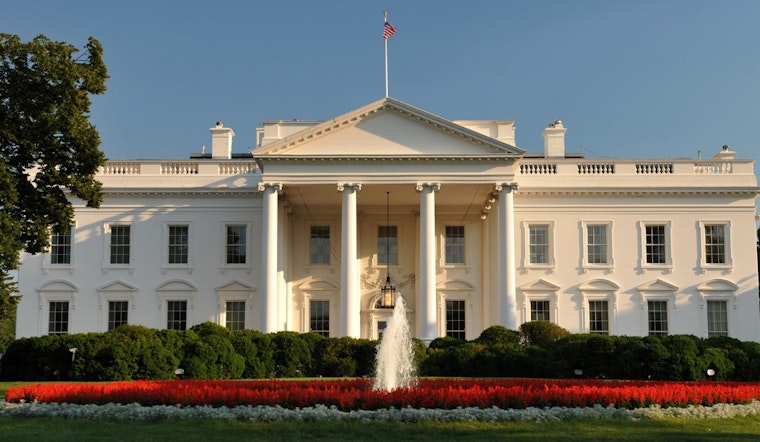
The White House on Friday dropped a legislative blueprint that essentially tells Congress: keep artificial intelligence rules light and federal, or risk strangling a booming industry in red tape. The plan casts AI as a core national competitiveness issue and lays out policy goals that touch everything from kids’ safety to electricity prices and intellectual property. With that, the political ball is now firmly on Capitol Hill, where lawmakers have to decide whether to craft one national standard or let states keep going their own way.
What The Blueprint Wants From Congress
The document sketches out roughly half a dozen guiding principles for lawmakers, including protecting children, preventing electricity costs from surging, respecting intellectual property rights, preventing censorship and educating Americans about the technology, as reported by AP News. It also urges Congress to head off a patchwork of state AI rules the administration sees as too heavy handed, warning that 50 different compliance regimes could slow growth and raise costs for developers and users alike.
How The Administration Is Trying To Centralize AI Policy
The blueprint does not come out of nowhere. In December the president signed an executive order telling agencies to identify and, where appropriate, challenge State AI laws that conflict with federal policy. "It is the policy of the United States to sustain and enhance the United States’ global AI dominance through a minimally burdensome national policy framework for AI," the order states, according to The White House. In other words, Washington wants one playbook, written in D.C., not 50 different versions scattered across state capitols.
Copyright Fights And The Legal Minefield
On intellectual property, the blueprint signals that the administration does not want Congress jumping directly into active copyright battles. It notes that the administration "believes that training of AI models on copyrighted material does not violate copyright laws" while also acknowledging arguments to the contrary, according to AP News. That position lands in the middle of a storm of lawsuits from writers, publishers, visual artists and record labels, and it comes on the heels of a roughly $1.5 billion settlement over claims that an AI company trained its systems on pirated books.
State Crackdowns That Sparked The Federal Push
Part of the urgency in Washington comes from the states moving first. Colorado has already enacted a broad consumer AI law, SB 24-205, aimed at high-risk systems and requiring documentation and oversight. The signed bill text is posted on the Colorado General Assembly website. On the West Coast, California has passed multiple AI measures focused on transparency and preventing harms, a trend tracked by researchers at the Center for Security and Emerging Technology. These state moves are exactly the kind of patchwork the White House says it wants Congress to tame.
Energy, Data Centers And The Power Squeeze
The blueprint also sounds an alarm about the raw power needed to run modern AI systems. It warns that soaring demand from data centers could drive up electricity costs and strain local grids as AI adoption accelerates. Regulators and industry officials are under pressure to add capacity and shield ratepayers while hyperscale AI deployments keep expanding.
What It Sets Up On Capitol Hill
In practice, the blueprint hands Congress the next move. Lawmakers now have to decide whether to lock in a single federal framework or leave room for aggressive state experiments. Expect committee hearings, sharp questioning, and plenty of witnesses from both the tech world and creator communities as members wrestle with how far federal preemption should reach.
The Legal Tools Behind The Push
The executive order that underlies the blueprint provides some teeth. It directs the attorney general to create an AI Litigation Task Force to challenge State laws deemed unlawful and tells the Commerce Department to publish an evaluation of State AI laws and flag "onerous" measures, which could carry consequences for certain federal funding programs, as the White House explains. Together, those levers give the administration ways to push back on state rules while it presses Congress for a uniform national law.
Congress now has a clear choice to make about where to draw the line between encouraging AI innovation and protecting consumers, artists and the power grid. The blueprint all but guarantees a year of high-stakes policy fights that will shape how, and how quickly, AI rolls out across the country.



