

























































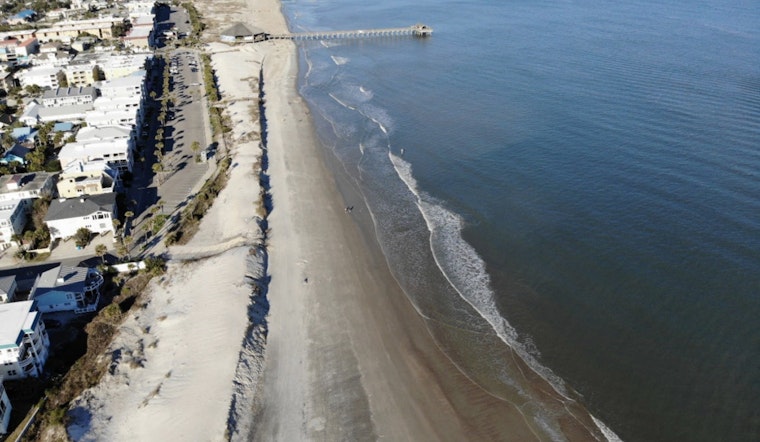
Tybee Island’s shoreline is taking a beating this spring. Dunes are scarped away, several public access crossovers are roped off and the high-tide line keeps creeping closer to parking lots and the pier. Local leaders say this is no longer just an eyesore. Without fresh sand in time, they warn, the island could be staring down real property damage and a hit to the tourism machine that keeps basic city services running.
Researchers tracking the shoreline say Tybee has already lost roughly 54% of its sand since the last renourishment, and that erosion is speeding up at about 15% per year. The project the island had lined up, which counted on about $12 million in expected federal support, is now in doubt. Tybee officials say they have already parked about $8 million in matching dollars from state, county and city coffers, but a delayed Army Corps placement could shave millions from local revenue and strain the municipal budget, according to the Atlanta Journal-Constitution.
What the Corps' plan says
The U.S. Army Corps of Engineers has a draft environmental assessment on the table that would keep federal participation in Tybee’s shoreline protection going through 2036. It envisions beach renourishment roughly every seven years, with the next federal sand placement currently penciled in for fiscal 2027. The draft also lays out how the federal cost share would work and describes the engineered “Federal template” the Corps would maintain to shield the island’s front beach and Back River reaches, according to the U.S. Army Corps of Engineers.
Why the money is tight
This year’s federal budget left the Corps with far less discretionary money for beach work, which forced the agency to triage a long line of renourishment requests. The Atlanta Journal-Constitution reported that the program was pared back significantly, leaving only a small pool of cash uncommitted. Local coverage notes a huge national backlog: WTOC reports that roughly $600 million in coastal renourishment projects are waiting in line while only about $60 million has been set aside nationwide.
Local science and pressure
On Tybee, scientists from the University of Georgia’s Skidaway Institute are flying drones and using lidar to build detailed sand-volume maps, pinpointing the worst erosion hot spots and backing up the island’s push for Corps work, according to reporting by WABE. The city has also posted public notices outlining resilience and infrastructure spending and says it has committed local dollars to bolster a particularly vulnerable stretch while officials lobby senators, members of Congress and Corps staff to get Tybee into the work plan, per City of Tybee.
What comes next
Tybee leaders say they are waiting on a final Corps work plan that will rank projects and decide who gets sand when. If the island misses this fiscal slot, the renourishment could slide into late 2027, exposing the shore to another hurricane season and still more sand loss. In that case, the town would lean on SPLOST, state grants and limited local reserves to plug the gaps, but planners warn those sources are a poor substitute for federal assistance, according to WJCL.



