

























































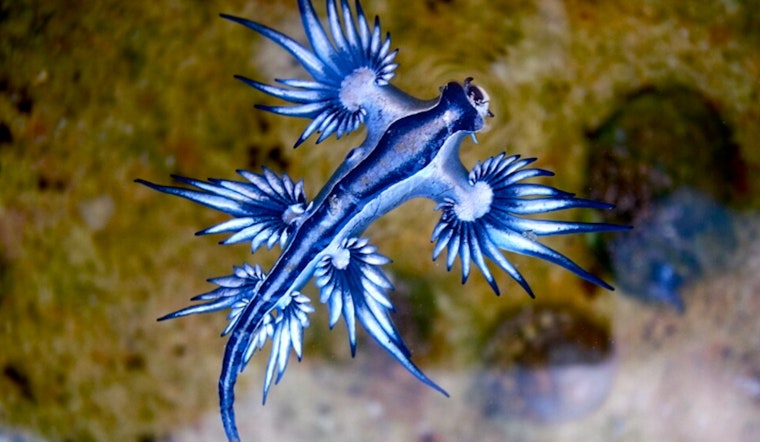
Spring breakers on the Texas Gulf Coast are getting an unexpected guest star this week: electric-blue sea slugs nicknamed “blue dragons.” The ornate, inch-long nudibranchs have been washing up on beaches near Corpus Christi and Surfside Beach, startling beachgoers and prompting a flurry of warnings from scientists and safety officials. Their message is simple: look, do not touch. Even a dead blue dragon can deliver a nasty sting, as reported by the Houston Chronicle.
Researchers Find ‘Blue Wave’ Near Corpus Christi
Staff from the Harte Research Institute reported spotting around 20 blue dragons along a short stretch of sand on North Padre Island, according to the Houston Chronicle. In a Facebook post, the institute called the animals “absolutely stunning” and added a firm warning: “do NOT touch them.”
The sea slugs have been washing ashore alongside other open-ocean drifters, including Portuguese man-o-war, blue buttons and by-the-wind sailors, turning parts of the shoreline into a beautiful but hands-off display.
Why Their Sting Is Dangerous
Blue dragons (Glaucus atlanticus) specialize in eating venomous siphonophores such as the Portuguese man-o-war. Instead of destroying the stinging cells, they store them in finger-like structures called cerata. That stockpile can then be released all at once if the animal is disturbed or harassed, a trick that researchers say can make a blue dragon’s sting even more painful than a man-o-war hit, according to FOX Weather.
Beachcombers are being urged to treat any washed-up blue dragon as dangerous. The nematocysts, or stinging cells, can remain active on the sand even after the animal is dead.
Treatment And Beach Safety
If you are stung, experts recommend pouring vinegar or warm seawater over the affected area and resisting the urge to rub the wound. Rubbing can drive the stinging cells deeper into the skin. Freshwater is also a bad idea, since it can trigger more nematocyst discharge, according to Click2Houston.
Anyone who develops severe symptoms such as nausea, vomiting or disorientation is advised to seek medical attention immediately and alert lifeguards or local authorities.
A Seasonal Pattern And A Wider Signal
Researchers say these strandings tend to be seasonal, most often showing up between February and May when strong southeast winds push surface-dwelling organisms toward shore. The last major event of this scale took place in 2024, Harte Research Institute director Jace Tunnell told the Houston Chronicle.
Scientists also point to shifting currents and warming waters as possible reasons for changing ranges in Glaucus atlanticus, a trend noted by the Bureau of Ocean Energy Management.
What Researchers Want You To Do
The Harte Research Institute and other researchers are asking beachgoers to snap photos from a safe distance and leave the animals where they are. Their message is a “photo-not-touch” approach, highlighted in coverage by WTSP.
If you spot a cluster of blue dragons, officials ask that you report the sighting to local authorities or contact the Harte Research Institute so scientists can better track the scope of the event.





.jpg)