

























































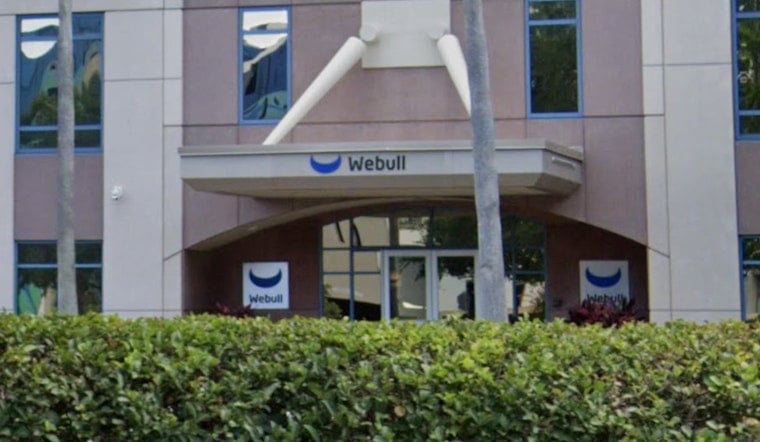
Webull, the trading app that once occupied two floors on Wall Street, has quietly traded the canyons of Manhattan for the palm trees of St. Petersburg, staking its global headquarters at 200 Carillon Parkway. Company leaders insist this was not just a tax play. They describe it as a bet on local talent, quality of life and the chance to stand out in a market that is not already jammed with big-name transplants. The move has helped anchor a growing fintech presence at the Carillon business park and has brought dozens of jobs to the area.
Carlos Questell, Webull’s chief of staff and the point person on the relocation, said the company spelled out its criteria early: a business-friendly environment, a strong local talent pipeline and a city where employees would actually want to show up to the office. In an interview with Business Insider, Questell said Miami was seriously considered but ultimately passed over because of what he called an “oversaturation of business traffic” that could make it harder for Webull to stand out. He also noted that lower operating costs in Florida free up capital that the company can plow into product innovation.
The Building And The Buy
Webull bought the former Catalina Marketing headquarters at 200 Carillon Parkway, a five-story, 157,755-square-foot building, for $29.5 million at the end of 2022, according to the St. Pete Economic Development Corporation. Local reporting from St. Pete Catalyst confirmed the sale and noted that Catalina continues to lease space in the building. The purchase gave Webull room to pull together teams that had been working out of a downtown co-working hub while the company ramped up local hiring.
Questell told Business Insider that Webull now has more than 150 people based in St. Petersburg, and that the relocation has helped cut operating expenses. Webull’s own company pages list 200 Carillon Parkway as its headquarters, with an additional office at 44 Wall Street in New York, a sign that the firm is keeping a foothold in Manhattan even as it builds a larger in-person culture in Florida.
Why Not Miami?
Miami has been the loud, flashy headline in Florida’s corporate boom, with a flurry of high-profile headquarters moves and a steady drumbeat of coverage about South Florida’s rise as a finance and tech hub. Moves such as Palantir’s shift to Miami, along with broader reporting on the region’s corporate influx, helped fuel concerns among some leaders about getting lost in the crowd. That backdrop is part of what pushed Webull to look for a different patch of the state.
Many observers point to St. Petersburg as a lower-cost, less frantic alternative that still delivers proximity to airports, universities and the broader Tampa Bay workforce. In other words, close enough to the action without having to elbow past everyone at the party.
Local Ripple Effects
City economic development officials say Webull’s move is already sending ripples through the local economy. The St. Pete EDC reports that the company has made a capital investment in the city and plans to hire locally, which leaders hope will help solidify a budding fintech hub. Webull has also inked local partnerships that signal it is not treating St. Petersburg as a fly-by-night address, including a branding deal with the Tampa Bay Rays announced in 2025. For a city that has been chasing larger corporate footprints without Miami-level price tags, landing a company willing to buy its own campus is a notable milestone.
For St. Petersburg, Webull’s decision is a proof point that a smaller Florida city can win big corporate bets without joining Miami’s stampede. For Webull, the calculation is straightforward: attract and keep talent by offering a better day-to-day life, and see if being a big fish in a smaller pond turns out to be the smarter long-term trade.





