

























































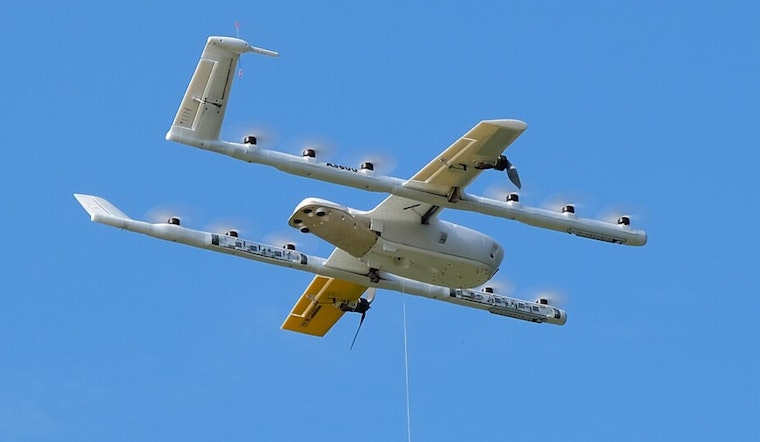
Wing, Alphabet’s drone unit, is bringing its flying couriers home. The company says it will start delivering packages by drone to homes across the San Francisco Bay Area in the coming months, extending a service it helped pioneer back into the region where it was born. After years of tests and commercial launches in other U.S. metros, the move marks a big step up for Wing’s residential network. For Bay Area households, that could soon mean small, automated aircraft zipping overhead with groceries, medicine or fast food.
Wing laid out the plan in today's company post, calling the Bay Area expansion a “homecoming” and part of a broader coast-to-coast push, according to Wing. In that post, the company says it has safely completed more than 750,000 residential deliveries and now serves more than two million customers in parts of the U.S. Wing also highlights its partnerships with retailers, including Walmart, and delivery platforms such as DoorDash. The company reminds readers that Wing began as a project inside Google’s X lab in 2012, pitching the Bay Area launch as a return to its roots rather than a brand-new experiment.
How deliveries will work
Wing's drones are set up for smaller, urgent orders such as meals, medications and household essentials, and the company is already running similar operations for retailers and restaurants in other markets. As reported by Reuters, Wing offers rapid food delivery via DoorDash from chains such as Wendy’s and Panera and provides Walmart grocery deliveries in under 30 minutes in some U.S. states. Reuters also noted a 2024 pilot where Serve Robotics’ ground robots picked up restaurant orders and then handed them off to Wing drones, a handoff model designed to extend range and flexibility.
What Bay Area neighbors are already debating
The Bay Area is not exactly fresh airspace for flying couriers. San Francisco has already seen public fights over how and where drone testing should happen. The San Francisco Chronicle reported that DoorDash’s plan to test drones at a Mission District warehouse triggered zoning appeals and helped spur an ordinance that could slow or limit outdoor testing. Supervisor Jackie Fielder told the paper she wanted to curb DoorDash’s ability to do what they want, when they want. Neighbors and labor groups have also flagged worries about noise, privacy and the potential loss of delivery jobs, all of which could influence how aggressively Wing is able to scale flights over dense neighborhoods.
When you might actually see a drone
Wing says the Bay Area rollout will start in the coming months and is inviting residents to sign up for updates on its site, but it has not shared a detailed neighborhood map or specific operating hours. The company suggests flights will focus on small, time-sensitive orders and plug into existing retail partners rather than operate as a stand-alone drone marketplace. That points to a gradual launch, with early service most likely in areas that already host Wing or partner operations.
Key things to watch next include which specific zones Wing picks to go live first, what city-level permits or restrictions land on the books, and how partnerships with retailers such as Walmart and platforms like DoorDash might push drone delivery from novelty to everyday habit for Bay Area shoppers. Details should sharpen as companies announce service areas and local agencies publish approvals or conditions for flights.





