

























































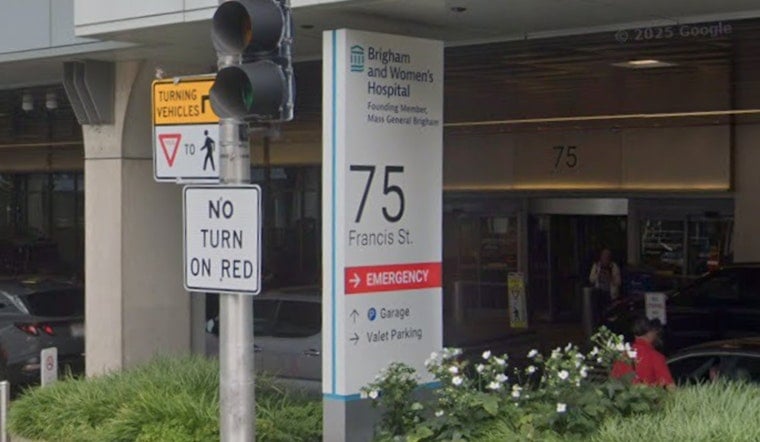
Weeks of unrelenting headache and a strange pulsing “heartbeat” in her ear turned out to be more than just a rough patch for a Boston nurse. The symptoms led to a diagnosis of idiopathic intracranial hypertension, a condition in which pressure inside the skull climbs high enough to endanger vision. Her brief episodes of blurry vision and unsettling ear sensations finally pushed her into the emergency room, where doctors identified the problem and started treatment that has since eased her symptoms. Physicians say IIH can be tricky to spot early because routine checks do not always pick it up.
Allyson Drummey told NBC Boston that “when I lay down, I was hearing almost my heartbeat in my ear, just kind of a thud,” and the station reports she was diagnosed with IIH after an ER visit. According to the outlet, medications have brought her headaches under control and the pulsing noise has stopped. Her story is exactly the kind of real-world case that researchers at Mass General Brigham say they hope to catch earlier with improved diagnostic tools.
New MRI Measures Aim To Flag IIH Without Spinal Tap
Mass General Brigham has launched an IIH Research and Treatment Initiative and released a study indicating that MRI measurements of the brain’s glymphatic, or waste-clearing, flow could serve as a noninvasive diagnostic clue, according to Mass General Brigham. The team used diffusion-based MRI analysis and reports that those fluid-flow patterns may help clinicians detect pathologic intracranial pressure without relying solely on lumbar puncture. The new initiative links this imaging work with broader efforts to study the causes of IIH and to develop new treatments.
The research was also detailed in the Journal of Neuro-Ophthalmology, where investigators used diffusion tensor imaging along the perivascular space (DTI-ALPS) to generate ALPS indices. The paper reports that ALPS indices varied with disease duration: they were lower in recent-onset IIH, higher in long-standing untreated disease and close to normal in patients whose condition was well controlled. The authors suggest that glymphatic measures may reflect the brain’s adaptive responses to sustained pressure rather than pointing to a single underlying cause.
Weight-Loss Drugs Already Under The Microscope For IIH
Because IIH is strongly associated with higher body weight, researchers are exploring whether glucagon-like peptide-1 (GLP-1) receptor agonists might change the course of the disease. A large propensity-matched multi-institutional cohort study published in the Journal of Neurosurgery found that people with IIH who began GLP-1 therapy had lower odds of new headaches, visual deficits and neurosurgical intervention at six months and one year. The authors caution that randomized trials are still needed to confirm any benefit. Mass General Brigham notes that GLP-1 drugs are among the treatment options its IIH initiative plans to investigate further.
IIH most often affects women of childbearing age and is frequently linked to obesity. Common symptoms include severe headaches, pulsatile tinnitus and visual changes that can progress to optic-nerve swelling, known as papilledema, or even permanent vision loss, according to a review in the New England Journal of Medicine. Local reporting for NBC Boston also noted that roughly nine in ten patients with IIH are overweight or obese and that, as clinicians at Mass General Brigham observed, about 85% to 97.5% of cases occur in women.
Clinicians say anyone dealing with persistent, unusual headaches, new visual symptoms or a whooshing or heartbeat-like noise in one ear should seek evaluation from a primary care clinician or a neuro-ophthalmologist. Patients in Drummey’s situation often improve on medical therapy, but doctors emphasize that early detection and careful monitoring of vision remain critical to preventing permanent damage.



