

























































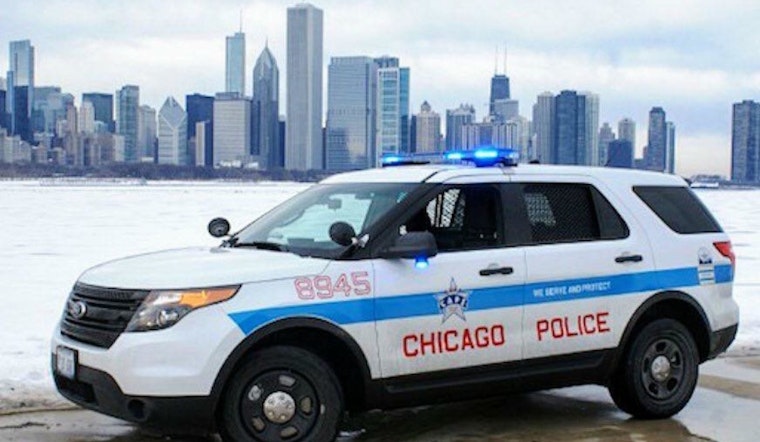
Chicago Police Supt. Larry Snelling walked into a packed and fired-up oversight hearing in Brighton Park on Thursday and spent the evening on the defensive. Commissioners pressed him to explain why Chicago police officers did not step in while federal immigration agents carried out aggressive raids across the city last fall, as residents jeered, chanted and waved signs accusing CPD of helping ICE and Border Patrol.
Commission presses Snelling at Kelly High School
WTTW reports the Community Commission for Public Safety and Accountability called a special public session at Thomas Kelly College Preparatory High School on April 2 to question Snelling about what CPD did, and did not do, during Operation Midway Blitz. Commissioners said they wanted straight answers on whether Chicago officers helped federal agents or stayed within the city’s Welcoming City limits while trying to manage crowd-control scenes around the raids.
According to WTTW, Snelling told the panel that his officers “cannot and will not” arrest federal agents who are carrying out immigration enforcement, and he argued that the Welcoming City ordinance was never written with the sheer scale of last fall’s federal operations in mind. When he insisted that “our officers showed up to keep down violence,” the auditorium answered with loud boos. Snelling added that a draft policy to document suspected federal misconduct is still under review, which only fueled calls from the audience for faster action.
What the mayor ordered
CBS Chicago noted that Mayor Brandon Johnson tried to get ahead of those concerns on Jan. 31, when he signed an "ICE On Notice" executive order that directs CPD to preserve evidence, attempt to identify supervising federal officers, and refer possible felony matters to the Cook County State’s Attorney. The order gave CPD 30 days to write procedures spelling out how that would actually work and framed the move as a way to build a record for accountability whenever federal agents may have broken state or local laws.
The Oct. 4 confrontation
Much of the hearing kept circling back to a chaotic Oct. 4 clash in Brighton Park, when a Border Patrol agent shot Marimar Martinez and federal officers fired tear gas and pepper balls into a crowd. AP reports that federal prosecutors later moved to dismiss the criminal case tied to that encounter, while Bloomberg Law and other outlets note that judges and prosecutors have been wrestling with whether, and how, to release body-camera video and other evidence.
The Chicago Tribune reported that some officers on the scene were themselves hit by chemical agents as CPD tried to separate federal agents and protesters while the situation rapidly escalated. That night has since become the flashpoint residents point to when they accuse the city of letting federal forces run wild in immigrant neighborhoods.
Oversight response and next steps
The Sun-Times reports that by the end of the meeting, the commission voted to recommend that the city inspector general audit possible violations of the Welcoming City ordinance and other local rules. Meeting organizers and community advocates demanded firm timelines for finalizing CPD’s draft policy, more transparency around body-camera footage, and a clearer accounting of any internal reviews.
The session wrapped up the way it started, loudly, with chants echoing through the auditorium and several people ultimately escorted out as tempers flared over what many saw as too few answers and too many delays.
Legal hurdles
Even if the inspector general finds problems, turning local anger into criminal charges against federal agents would be a tall order. Legal experts note that prosecuting federal officers is both legally complicated and politically fraught, since doctrines like the federal-officer defense and limits on subpoena power can block or slow down state cases. ProPublica lays out why local and state investigations into ICE, Border Patrol and other federal agents are relatively rare, while local reporting on new Cook County protocols has detailed the specific evidentiary and jurisdictional hurdles prosecutors would face. Cook County’s state’s attorney has already published guidance on how referrals would be handled and has said any case would be weighed carefully under state law.
Officials say the commission’s audit recommendation and the mayor’s executive order are designed to create the documentation prosecutors would need if they ever try to bring a case, even as prosecutors and legal observers warn that proving criminal intent by on-duty federal officers will be difficult. The Sun-Times notes that Snelling told the commission the draft CPD policy is still "in the works" and is being reviewed by administration officials, while commissioners and community members continue to push him to move faster.
For now, the fight over federal immigration enforcement in Chicago has shifted from the streets to hearing rooms and legal offices, where the next round will focus on how local institutions document, respond to and potentially challenge federal actions. With an inspector general audit on the table and residents refusing to let the issue drop, the controversy is not leaving the headlines anytime soon as officials try to turn policy promises into enforceable procedures.





