

























































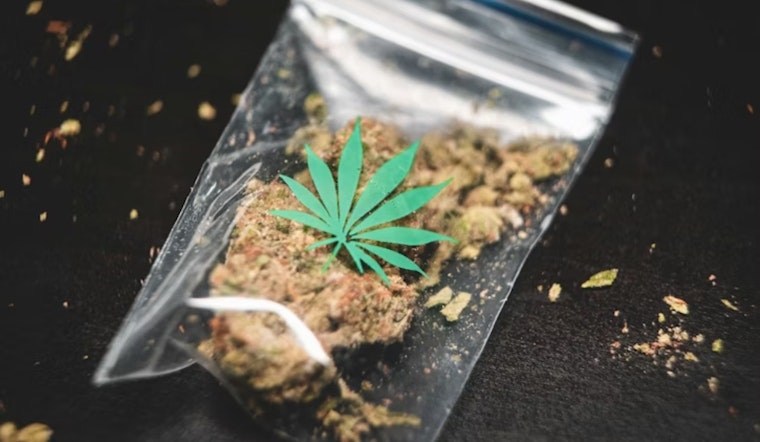
Ten years after voters approved Proposition 64, California’s licensed cannabis market is still getting outgunned by the illicit trade. State analysts estimate that in 2024, licensed cultivators produced about 1.4 million pounds of dry‑flower equivalent, while unlicensed growers produced roughly 11.4 million pounds. Even with more raids and larger seizures, local bans, high fees, and collapsing wholesale prices continue to push many consumers to buy off the books.
The scale of that gap is laid out in a state‑commissioned market outlook. Licensed operators supplied around 1.4 million pounds in 2024, while mid-range estimates put unlicensed output at around 11.4 million pounds. That leaves licensed businesses covering only about 38 to 40 percent of total consumption, according to the Department of Cannabis Control. The ERA Economics analysis prepared for the DCC says falling prices, local taxes, and regulatory costs have squeezed margins and slowed the legal market’s ability to lure customers away from illicit sellers.
Enforcement Is Ramping Up
State officials are not exactly sitting this one out. A multiagency crackdown has been running for several years, and the numbers are huge. The governor’s office says California’s Unified Cannabis Enforcement Task Force has seized and destroyed more than $1.2 billion in illegal product since 2022. In 2025 alone, authorities reported several major operations, including more than 377,000 pounds destroyed statewide, and highlighted a series of big hauls in the Bay Area. Alameda County by itself accounted for over 81,000 pounds, valued at about $134 million. Those takedowns have targeted environmental damage, hazardous pesticides, and labor abuses, along with unlicensed cannabis, according to the Governor’s Office.
Local Rules and Taxes Keep Legal Shops Sparse
On the ground, access to legal storefronts is anything but consistent. The state’s local‑access data tool shows that only about 44 percent of cities and counties allow any kind of cannabis business. That means more than half of California jurisdictions bar licensed operators altogether, sharply limiting the places where consumers can buy legally. The resulting patchwork, combined with local fees and tight zoning rules, keeps retail density low and hands a built‑in advantage to unlicensed sellers who have no such constraints.
The ERA Economics market outlook also notes that the state suspended the cultivation tax on July 1, 2022 and that wholesale prices have dropped sharply in recent years. Those changes have trimmed some costs for licensed operators, but they have not yet been enough to pull most consumers into the regulated market, according to the ERA Economics report.
What That Leaves Cities
The result is a map of winners and losers. Cities that allow cannabis retail capture tax revenue and have a better shot at pushing out illicit sellers. Many other jurisdictions, however, are left with few legal options for consumers and a thriving underground trade.
Local coverage marking Prop. 64’s tenth anniversary points out that some Bay Area cities are seeing real cannabis tax dollars. San Jose, for example, brought in about $13 million in cannabis tax revenue last fiscal year, even as legal access remains spotty around the region, according to The Press Democrat. Business owners and city officials told reporters that drawn‑out permitting, high compliance costs, and extra local levies make it hard to open a compliant shop in the first place, which nudges many consumers right back to the illicit market.
Policy Choices Ahead
Gov. Gavin Newsom has directed state agencies to keep the pressure on large unlicensed grows, while regulators and consultants sketch out possible fixes. Ideas include reducing local barriers to storefronts and delivery services, reworking fee schedules, improving consumer education about the legal market, and continuing coordinated, multiagency enforcement. Those are the kinds of moves the ERA/DCC analysis identifies as ways to shift market share toward licensed sellers.
The same analysis also underscores a structural constraint that California cannot solve on its own. Federal prohibition blocks interstate commerce for licensed cannabis, which helps sustain cross‑border flows of illicit product and keeps prices low for illegal operators, according to the ERA Economics report.
Legal Notes
Proposition 64 also reshaped penalties for cannabis offenses, and critics say some of those reforms unintentionally weakened deterrence for large unlicensed grows. The voter‑approved measure reduced penalties for certain unlicensed cultivation offenses to relatively small fines and short jail terms. In some cases, the maximum penalty is a fine of up to $500 and up to six months in jail, a detail highlighted in local coverage and the broader post‑legalization debate, according to The Press Democrat.
A decade in, California’s legal cannabis system looks less like a finished product and more like a work in progress. Enforcement is sharper, and licensed production is higher, but unless zoning rules, tax structures, and federal policy change alongside the raids, the state’s regulated businesses will struggle to close the gap with the illicit market.



