

























































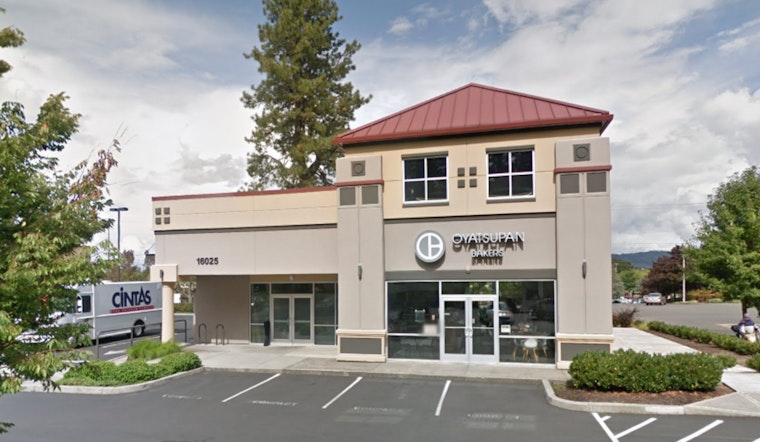
Beaverton's beloved Japanese bakery Oyatsupan is quietly leveling up Portland's carb game. The shop best known for its pillowy shokupan and curry-stuffed doughnuts has opened Pan Kobo, a milk bread production workshop in the Central Eastside that lets owner and head baker Hiroyuki “Hiro” Horie focus almost entirely on those ultra-soft Pullman-style loaves locals chase down for sandwiches and toast.
The new facility shifts most of Oyatsupan's shokupan baking out of the cramped retail kitchen in Beaverton and into a dedicated industrial space built for wholesale and research-and-development. In practical terms, that means more loaves, more consistent supply, and a lot more chances for Portland cafés and sandwich shops to stack their menus with milk bread in the months ahead.
Pan Kobo, at 333 S.E. Second Avenue, spans roughly 7,060 square feet and went into production last summer, giving Oyatsupan room to scale its shokupan output, as reported by Portland Business Journal. The site currently turns out about 3,000 to 5,000 loaves a week, and with equipment and floor space already in place, Horie says the team hopes to eventually reach around 15,000 loaves weekly. The former bakery space has been retrofitted with commercial ovens, slicing and packaging lines, and a compact production crew to keep everything moving.
Because Oyatsupan's shokupan skips artificial preservatives, Pan Kobo includes an ISO-7 certified cleanroom for slicing and packaging to help keep loaves fresher for longer, according to The Oregonian. Horie and bakery manager Tara Mead describe a roughly 24-hour process built on long, cool fermentations that create the bread's soft crumb and subtle milky flavor. That method trims shelf life compared with mass-produced loaves, but they argue the payoff in texture and aroma is exactly what customers are after.
A Workshop For Milk Bread
"Pan kobo" translates to "bread workshop," and Horie designed the Central Eastside space as exactly that: a place to obsess over milk bread. He experiments with both flat-top and yama-style shokupan while tweaking hydration and fermentation, as described in a profile by Bridgetown Bites. "In general, I like testing. I really like to research and develop the new products," Horie told the outlet.
For now, Pan Kobo operates as a wholesale-only facility. The team has, however, left room in the plan for a possible small retail window in the future if the timing and demand line up.
Where You'll See the Loaves
Oyatsupan's shokupan is already on shelves at local retailers and grocers, including Uwajimaya and several New Seasons locations. Expanding that wholesale footprint is a clear goal as Pan Kobo ramps up output, Portland Business Journal reports. Wholesale accounts already make up a significant share of the business, and the new capacity should help stabilize supply for sandwich makers and neighborhood cafés that depend on a steady flow of milk bread. Local chefs have said they welcome more consistent access to shokupan without long lead times.
Why It Matters For Portland
Demand for Japanese-style breads continues to climb across Portland, and a dedicated shokupan workshop keeps more of that production close to home while giving restaurants and markets a reliable local source. A video feature from KOIN shows the production line in action, with bakery manager Tara Mead overseeing the daily pace as Horie fine-tunes recipes in the background. The setup is designed to deliver more local supply, more consistency for retailers, and room for Oyatsupan to grow its wholesale relationships without losing the craft that turned the loaves into a favorite in the first place.
For fans, nothing changes on the front end just yet. Oyatsupan still sells its full lineup of breads and pastries at the Beaverton café, which lists its address as 16025 SW Regatta Ln on the bakery's website. Pan Kobo, meanwhile, will stay focused behind the scenes on wholesale production while Horie keeps the option of a small customer-facing counter on the table.




