

























































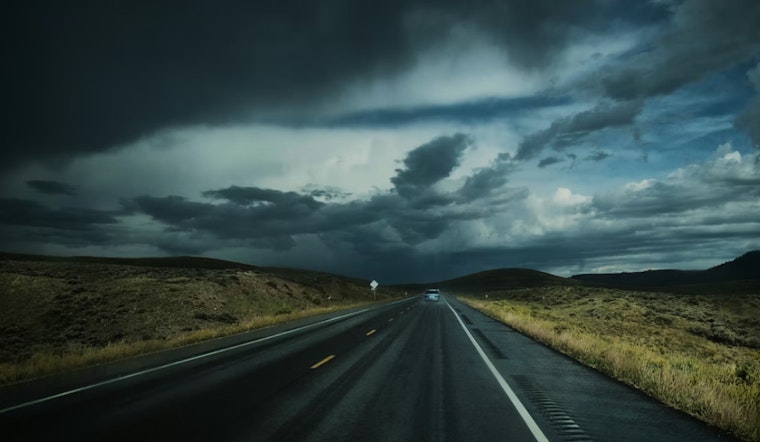
A central Oregon truck driver says she stared down a spinning funnel on Saturday as hail and heavy rain pounded Highway 20 near Tumalo, and she kept the camera rolling while traffic slowed and scrambled for cover.
The video, obtained by KATU News, shows a low, narrow funnel crossing the highway just outside Tumalo. The station identified the driver as trucker Sarah Bennett, who told them, "I realized what I believed was a tornado crossing the road." Bennett was driving west on Highway 20 on Saturday, April 11, when she hit record, according to KATU News.
Storm Tracker 2 Doppler radar showed a strong shower sitting over the Tumalo area at the time. But the nearest radar coverage was not exactly close at hand. The Portland and Medford sites, more than 125 miles away, were only sampling the storm down to about 11,000 feet, which means anything spinning closer to the ground could have slipped under the beam. The National Weather Service forecast office in Pendleton told KATU News it will review the video and the atmospheric setup from that afternoon before saying whether a tornado actually touched down.
Why Radar Can Miss Low Level Funnels
Doppler radars scan the sky at fixed elevation angles. As the beam travels away from the radar, it rises higher above the ground, which means that far from the site it can easily overshoot low level rotation hiding in valleys and mountain basins. The National Weather Service notes this beam height issue as one of several built in limits of the WSR-88D radar network.
Local NWS spotter summaries also point out that tornadoes are the least common severe convective hazard in many inland Northwest counties. Because of that, forecasters lean heavily on what people actually see on the ground and will scrutinize video, spotter calls and any slivers of radar data before confirming a touchdown. For an example of how that kind of regional analysis looks, see NWS Boise.
Tornadoes Are Uncommon In The Pacific Northwest
Oregon does get tornadoes, but they are relatively rare and, when they do occur, they tend to be short lived and weaker than the classic twisters that tear across the central Plains. That long term pattern is a big reason meteorologists treat visual reports with caution and insist on blending video, trained spotter accounts and whatever radar they can get before calling anything a confirmed tornado.
What To Watch
If you see a funnel or your area goes under a tornado warning, head to an interior room on the lowest floor, stay away from windows and follow local emergency alerts. For more on how to shelter and prepare, check guidance from the Centers for Disease Control and Prevention, and contact your local National Weather Service office for the latest updates.





