

























































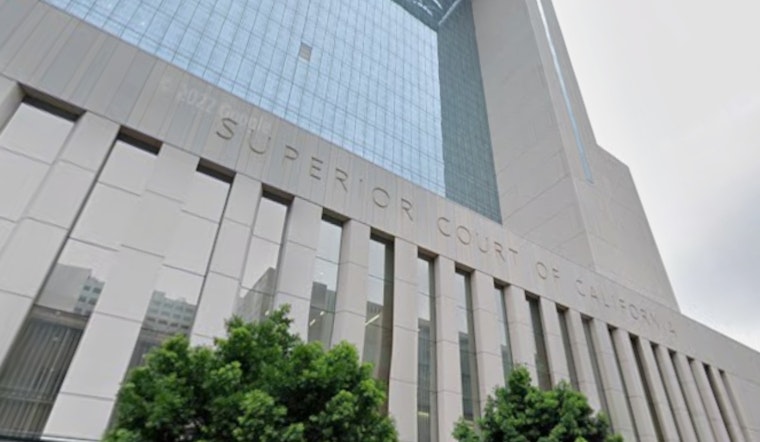
A South County widow is getting another shot in court after a Chula Vista jury sided with a local mortuary last year, despite a heartbreaking funeral mix-up that left her family staring at a stranger in their loved one’s casket.
Last Wednesday, the Fourth District Court of Appeal sent Celina Gonzalez’s breach-of-contract claim back to San Diego Superior Court, reviving part of a lawsuit that started in 2020. The Gonzalez family had gathered for an open-casket viewing when they realized the body in the coffin was not 47-year-old Jose Gonzalez Jr., and later learned his remains had already been cremated in Texas.
The appellate opinion recounts that Jose died in Fort Worth on March 20, 2020. According to court records, the Tarrant County Medical Examiner’s office likely mixed up identification tags for Jose and another man who died a day later. That error set off a chain of events that sent Jose’s body to a willed-body program and resulted in his cremation on April 17, 2020. Family members discovered the mistake at a memorial service on April 23, and Celina Gonzalez received what were identified as Jose’s cremated remains on May 6, 2020. The opinion traces the full timeline and the parties involved, as detailed by Justia.
Why the appeals court stepped in
The appellate panel zeroed in on the mortuary’s affirmative defense of impracticability, concluding that it “sounds in equity” and therefore must be decided by a judge, not a jury. On that basis, the court reversed the jury’s verdict on Celina Gonzalez’s breach-of-contract claim against the mortuary, while affirming that other family members did not have standing to sue on that contract claim.
The ruling sends the contract dispute back for a bench determination on whether the mortuary’s performance was excused. If the trial judge rejects the impracticability defense, the court can then move to determine damages, including the possibility of sending that issue to a jury. In the process, the opinion sketches out how California courts should handle similar disputes involving funeral-service contracts.
How the error unfolded
Court documents, summarized in public case reports, describe a multi-step mix-up involving several Texas businesses and a transport contractor shuttling remains among the Tarrant County medical examiner, a Texas mortuary, and a willed-body program. At one point, a Texas mortuary allegedly re-tagged a body before shipping it to Community Mortuary in Chula Vista.
Community Mortuary staff testified that they relied on the paperwork and identifiers that arrived with the shipment, including a burial and transit permit and a mortuary ankle tag. The Gonzalez family countered that Community should have followed up on what they viewed as red flags, such as photographs and a distinctive tattoo that did not match Jose. Those details appear in the appellate record, as summarized by FindLaw.
What’s next
On remand, the San Diego trial court has been instructed to independently decide, in a bench proceeding, whether the mortuary’s impracticability defense excuses the alleged breach of contract. If the mortuary does not carry that burden, the court has been directed to conduct further proceedings on damages, which could then be submitted to a jury.
Celina Gonzalez’s attorney, David C. Sullivan, said he was pleased with the appellate ruling, while Community Mortuary declined to comment, citing the ongoing nature of the case, according to The San Diego Union-Tribune.
Legal stakes and industry fallout
Beyond the Gonzalez family’s pursuit of damages, the case highlights how courts will treat equitable defenses in consumer-facing funeral-service contracts and where the legal line is drawn on who can sue when things go wrong.
The appellate opinion emphasizes that negligence claims may still proceed on fault-based theories, but that expanding contract damages to a broad group of extended family members who never signed the agreement would not match what the contracting parties reasonably expected. It is a rationale that funeral providers and their insurers are likely to watch closely as similar disputes surface in the future.



