

























































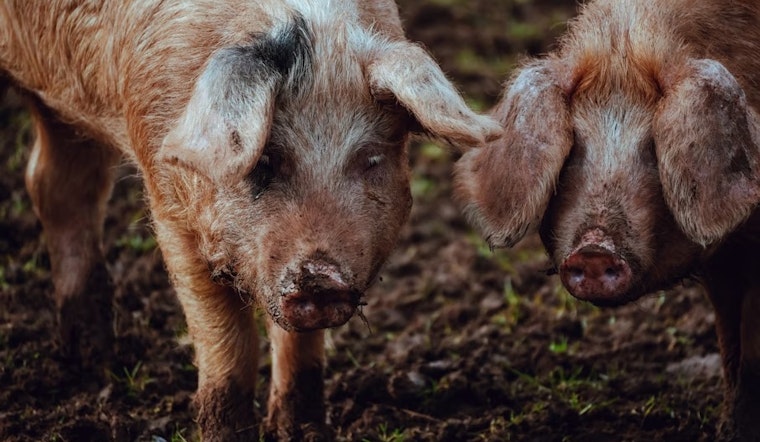
In a state practically synonymous with feral hog trouble, El Paso County is the glaring blank spot on the map. While wild pigs have chewed up crops, rangeland, and suburban landscaping across almost all of Texas, experts say El Paso still has no confirmed, established population of feral swine. That gap matters because once the animals get a foothold, they reproduce fast and can turn fields and riparian areas into a churned-up mess in a single season.
How Experts See Texas’ Lone Holdout
"It's definitely free of an established population to our knowledge," Marcus Blum, an assistant professor and AgriLife Extension wildlife specialist, told the Houston Chronicle. In a state where feral swine are essentially everywhere, that is not a small claim.
A federal environmental assessment backs up the scale of the problem elsewhere. Feral swine have been documented in at least 253 of Texas’s 254 counties, according to USDA APHIS, which makes El Paso’s hog-free status a true outlier.
The Massive Herds and the Money Trail
Counts of Texas’s feral hogs and the damage they cause vary, but none of the estimates are comforting. The Texas A&M Natural Resources Institute’s wild-pig project maps roughly 2.6 million animals across the state and warns of broad environmental and watershed impacts, according to the Texas A&M Natural Resources Institute.
Meanwhile, outreach materials from Texas A&M AgriLife Extension put the state’s feral-hog population closer to 3.5 million and tally agricultural losses and control costs in the high hundreds of millions of dollars each year. In 2024 alone, AgriLife’s abatement project helped landowners remove about 34,000 feral hogs and estimated $13.2 million in economic benefit from those removals. According to Texas A&M AgriLife Extension, those kinds of numbers are a reminder that even “controlling” feral hogs is not cheap.
Why El Paso Is Still Winning the Hog War
Feral hogs generally require reliable water, dense cover, and steady food sources to establish a breeding population. Much of El Paso County is simply too arid to provide that combination.
The Texas Parks and Wildlife Department notes that sows can start breeding as early as six months of age and carry a litter for about 115 days on average. Those reproductive numbers let populations explode wherever conditions are favorable. For now, though, El Paso’s dry landscape and limited riparian corridors act as natural barriers keeping the pigs from turning the county into another wallow.
Texas’ Patchwork Battle Plan
Across the rest of the state, keeping hog numbers down is a constant, imperfect grind. Control efforts are a patchwork of trapping, targeted removals, extension outreach, and property-level management, backed by a mix of state and federal assistance. Programs described by Texas A&M AgriLife Extension combine technical help for landowners, on-the-ground removals, and education on best practices. Those efforts have taken tens of thousands of animals off the landscape in recent years, but they rarely wipe out local populations entirely.
For El Paso residents, officials say the best strategy is to keep it that way. That means staying vigilant, coordinating with neighbors, documenting and reporting any suspected sightings, securing livestock, and not approaching hogs if they do show up. Trapping, they emphasize, should be handled by trained professionals or landowner agents, and local extension offices can offer technical guidance and assistance.
Detailed guidance from the Texas Parks and Wildlife Department outlines how to report animals, stay safe around them, and follow state rules on control. As long as El Paso keeps following that playbook and leaning on the desert’s natural defenses, it remains Texas’s rare hog-free exception.



