

























































A Chicago man is facing a federal charge after authorities say he sent a series of violent online threats aimed at a U.S. Secret Service agent and the agent’s workplace. Federal court filings say he was arrested last week and is scheduled to return to federal court for a detention hearing on April 10.
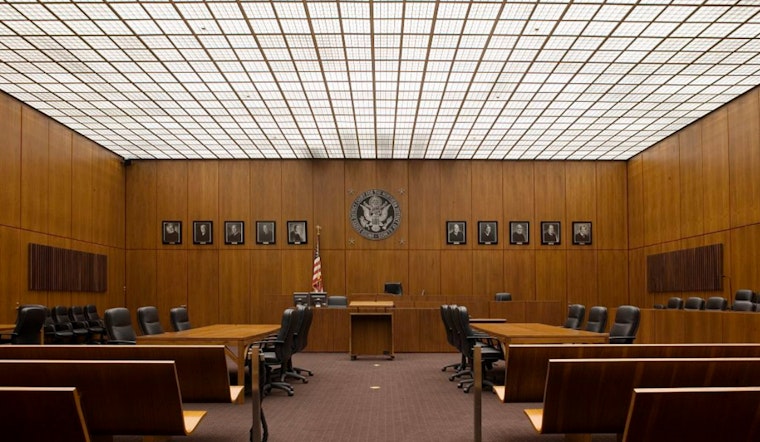
According to WGN‑TV, the complaint names the suspect as 29‑year‑old Michael Kovco of Chicago and charges him with transmitting a threat in interstate commerce. Both the filing and the U.S. Attorney’s Office list a detention hearing for 11 a.m. on April 10 in U.S. District Court in Chicago.
Federal charge and penalties
Prosecutors brought the case under 18 U.S.C. § 875(c), described by the Legal Information Institute as the federal statute that makes it a crime to transmit a communication across state lines containing a threat to kidnap or injure another person. The law carries a maximum possible prison term of up to five years, and courts have held that the government must prove the communication is a “true threat” rather than speech protected by the First Amendment.
What the complaint alleges
Court documents reviewed by WGN‑TV say Kovco sent a message on March 19 through the official White House website, allegedly threatening to “hunt” a Secret Service agent and to “shoot up” the agent’s workplace. The filings state that Secret Service officers had visited his home roughly two hours before that March 19 message.
The complaint also alleges that Kovco sent an earlier threat on March 17 that targeted President Donald Trump and one of the president’s sons. Some of the messages were signed “mr. i’m going to [expletive] kill your child kovco,” according to the court documents cited by WGN‑TV.
What’s next in court
Kovco is scheduled to appear for the detention hearing on April 10, when a federal judge will decide whether he should remain in custody while the case moves forward. If he is ultimately convicted of transmitting a threat in interstate commerce, he would face a potential federal prison sentence, with any punishment to be determined at a later sentencing hearing following a trial or plea.





