

























































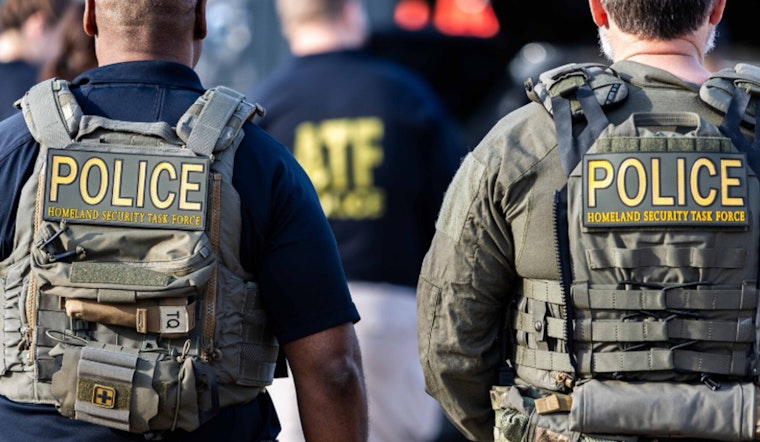
The federal government has quietly flipped the switch on a new Homeland Security Task Force website, putting a national map of regional HSTFs and a central coordination hub near Washington online for the first time. The site, hosted at hstf.gov, lays out the interagency initiative co led by the FBI and Homeland Security Investigations and highlights its mission against cartels, transnational gangs, human trafficking, and other cross border crime. The rollout follows a year of local HSTF launches and comes as the administration leans on high profile cartel designations and expanded law enforcement authorities.
The first official word came in a brief social media post from FBI Sacramento on X, which flagged the new site and noted that the task force has embedded personnel and resources across the country. The post linked directly to hstf.gov and described the effort as co led by HSI and the FBI, effectively serving as the public's initial pointer to the online hub ahead of broader agency briefings.
Built from an executive order
Homeland Security Task Forces grew out of President Donald J. Trump’s January 20, 2025 executive order, which directed the Attorney General and the Secretary of Homeland Security to stand up HSTFs in every state. The order describes HSTFs as a "whole of government" structure intended to "end the presence of criminal cartels, foreign gangs, and transnational criminal organizations" inside the United States. As posted by the White House, the directive also called for an operational command center to coordinate the new task forces.
How big is the network?
According to FBI public testimony and statements, the HSTF network now includes 30 regional core task forces and 29 satellite offices that together cover all 50 states, the District of Columbia, and U.S. territories. The FBI has described the HSTF National Coordination Center, or NCC, as the primary federal hub for aligning law enforcement, defense, and intelligence efforts, and says the program involves more than 8,500 federal agents, task force officers, and analysts, along with partnerships with roughly 440 state and local agencies. The FBI has used the NCC to steer large, multi jurisdictional operations.
Designations and expanded authorities
A separate executive order created a process for designating international cartels as Foreign Terrorist Organizations and Specially Designated Global Terrorists, a move the administration says unlocks additional legal and financial tools for enforcement. The White House executive order on cartel designations explains how the Secretaries of State, Treasury, and Justice are expected to coordinate those actions, and the Treasury’s Office of Foreign Assets Control has already announced sanctions tied to cartel entities in recent months. See the White House’s Executive Order 14157 and the related notice from Treasury for details. Treasury said its April 2026 action was designed to disrupt money laundering and other cartel revenue streams.
What this looks like on the ground
Federal and local offices have already been using the HSTF model in regional operations, combining HSI, FBI, DEA, ATF, and local police resources for coordinated takedowns and prosecutions. Field office press releases and local reporting show HSTFs driving large investigations, and the Houston and New York regional groups were rolled out with multi agency rosters and early enforcement actions. Coverage of the Houston HSTF launch alongside U.S. Attorney and FBI releases offers a closer look at how those deployments are structured.
The new site pulls public information about the HSTF network into one place, outlining the NCC, regional task forces, and partner agencies in a single, centralized hub. Online at hstf.gov, it provides a national map and public contact points and is meant to make the sprawling initiative more visible as operations continue to expand across the country.





.jpg)